
The US federal tax code is effectively paying some of the world's largest technology companies to borrow money for their artificial intelligence buildout, according to a new analysis from the Brookings Institution. The policy, which combines two separate tax deductions, creates a negative tax rate on debt-financed investment in computing equipment, meaning the government adds money to every dollar those investments earn rather than taking a cut.
Amazon, Alphabet, Microsoft, Meta, and Oracle — the so-called "hyperscalers" that operate massive data centres and computing networks — are expected to spend more than $800 billion on capital investments in 2026, Brookings reported. A growing share of that spending is being financed with borrowed money.
When a hyperscaler borrows to buy computing equipment, the marginal effective tax rate on that investment is -46%, according to the paper by Stijn Van Nieuwerburgh, cited in the Brookings analysis by Thomas Brosy and Elena Patel. Instead of taxing profits from the investment, the tax code effectively adds 46 cents to every dollar the investment earns.
How the subsidy works
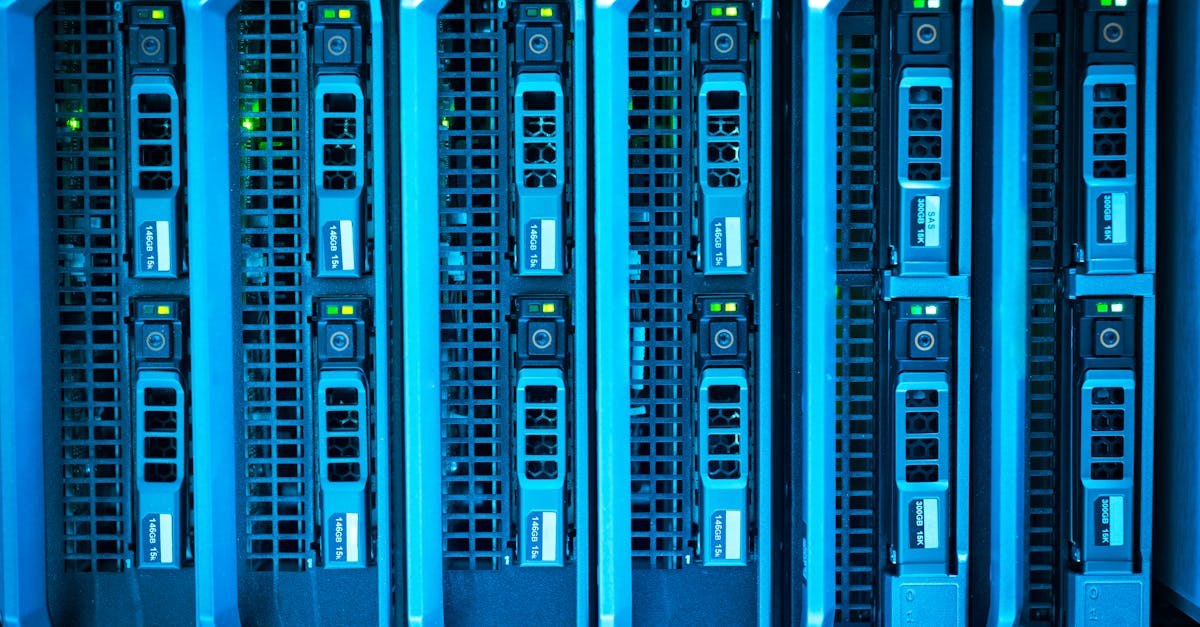
Computing equipment accounts for about two-thirds of the cost of an AI data centre, Brookings reported. Two federal deductions combine to create the subsidy.
First, companies can deduct the entire cost of computing equipment in the same year they buy it — a practice known as "expensing." This was made permanently available by last year's One Big Beautiful Bill Act (OBBBA). Many economists support expensing because it removes the tax penalty on investment without subsidising it, Brookings noted. Under a traditional income tax, a company deducts investment costs over several years, and the delay makes the deduction less valuable. With expensing, a company faces a marginal effective tax rate of zero on new investment financed with its own cash.
Second, current law allows companies to deduct the net interest they pay on debt, subject to certain limits. When combined with full expensing, this pushes the tax rate below zero on debt-financed equipment investment.
For 2026, OBBBA more than tripled the subsidy — from 14% to 46% — by making full expensing permanent, just as AI-related borrowing took off, according to the analysis.
Rising debt levels
Hyperscalers are borrowing more as their capital spending consumes a growing share of the cash their businesses generate, Brookings reported. From 2024 to the first half of 2026, their long-term debt more than doubled, from $232 billion to $486 billion. That debt is widely expected to continue growing at an even faster pace.
The reported debt figures tell only part of the story, the analysis noted. Companies are also financing AI infrastructure projects through leases, joint ventures, and private lenders, keeping some borrowing off their balance sheets. Meta's Hyperion data centre campus in Louisiana is a central example: a joint venture between Meta and the investment firm Blue Owl raised $27 billion in debt, financing about 90% of the cost of the campus's buildings and power infrastructure. That debt does not appear on Meta's balance sheet.
Risks to the financial system
Van Nieuwerburgh's paper, cited in the Brookings analysis, warns that if AI does not pay off as expected, losses on that debt could spread well beyond those companies. Because a growing share of the debt sits off companies' balance sheets, losses from an AI bust could spread to lenders and the wider financial system in ways that are hard to foresee.
Current law does cap interest deductions, but the restriction only targets interest payments exceeding a firm's interest earnings. Four out of five hyperscalers disclosed in their latest annual filings that their interest income significantly outweighed their interest costs, prompting worries that the deduction cap would not affect them, Brookings reported.
Policy options
The federal incentive to borrow could be removed, the analysis argued. The simplest method would remove interest from corporate tax calculations entirely, preventing firms from claiming interest deductions or counting interest as revenue. Under this system, debt-financed and equity-financed investments would face identical taxation. This idea, backed by numerous economists and certain policymakers, essentially converts the existing corporate income tax into a cash-flow tax on corporations.
Another option would permit interest deductions solely when companies spread out investment costs over time instead of deducting them upfront. This condition already applies to real estate firms and regulated utilities.
"The nation cannot afford this bet," Brosy and Patel wrote. Every dollar the hyperscalers save in taxes is a dollar the federal government does not collect, at a time when federal debt is near an all-time high.
What this means for students
For university students, the tax subsidy has several implications. If the AI buildout succeeds, it could accelerate job creation and research investment in AI-related fields, potentially benefiting students in computer science, engineering, and data science. However, if the debt-fueled bet fails, the resulting financial instability could affect the broader economy, including university endowments, research funding, and job markets for graduates. The policy also means the federal government is forgoing tax revenue that could otherwise fund public services, including higher education subsidies and student financial aid.