
A University of Alberta researcher is working with Ottawa-based Calian GNSS to develop GPS antennas designed to withstand electronic warfare, a collaboration that could give Canada a sovereign capability to produce its own military-grade navigation technology.
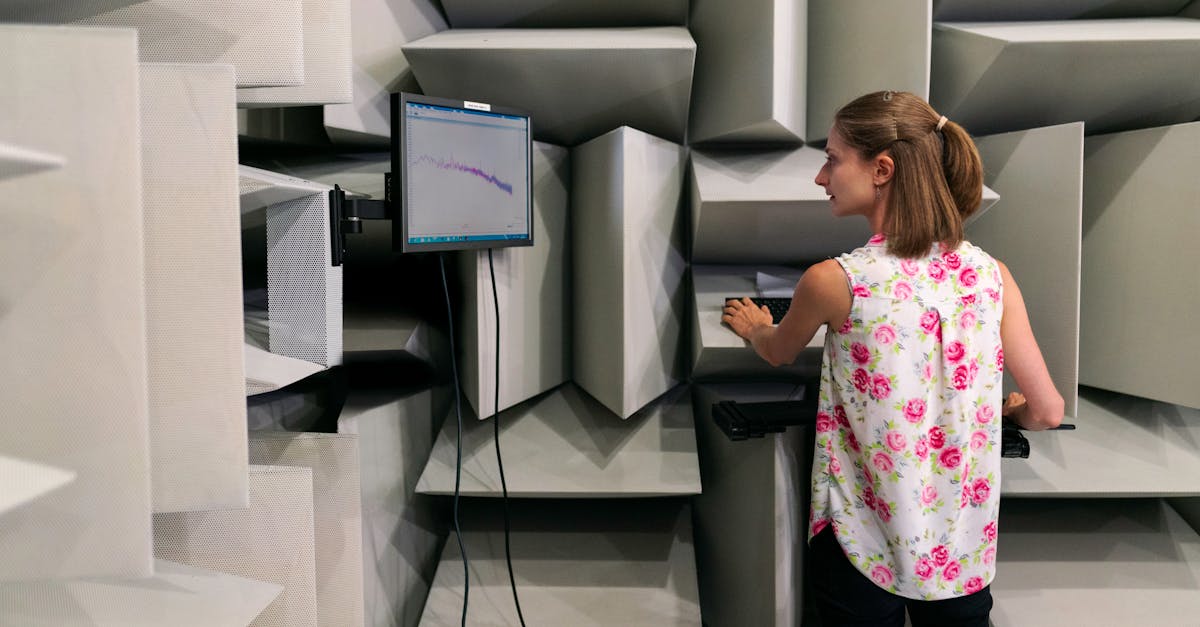
According to a story published by the University of Alberta's Folio news site, electrical and computer engineering professor Ashwin Iyer has been refining ultra-compact antenna designs for about a decade. His lab, the Microwave, Millimetre Wave, and MetaDevices (M3) Laboratory, houses Edmonton's only radiofrequency anechoic chamber — a room built to absorb electromagnetic radiation and block outside interference.
About 14 months ago, Iyer began working with Calian GNSS to incorporate his research into mission-critical GPS antennas for mobile platforms such as aerial drones and land vehicles. The partnership aims to produce antennas that can resist two main forms of electronic attack: jamming, which blocks signals, and spoofing, which broadcasts fake coordinates to misdirect a vehicle.
"Spoofing is arguably worse," Iyer told Folio. "You can systematically throw something off course while the whole time it thinks it's on course. We're building antennas resilient to those types of denied and contested environments."
Iyer's work is part of a broader push at the University of Alberta. He co-directs the Centre for Applied Research in Defence and Dual-use Technologies (CARDD-Tech), which Folio described as Canada's first university defence-focused innovation centre. The centre has generated more than $25 million in research projects over two years and anchors the university's $120-million DEFENDS initiative. Within DEFENDS, Iyer is leading the creation of a facility to test and develop technologies that can withstand electronic threats.
For students, the collaboration signals growing opportunities in defence-related research and engineering at Canadian universities. The U of A's work with Calian — a company that spun off from the University of Saskatchewan in 1965 and now operates more than 168 satellite ground stations and antennas worldwide — could mean more co-op placements, internships, and research assistant positions for students interested in dual-use technologies that serve both military and civilian applications.
Chris Pogue, Calian's president of defence and space, told Folio that the company sees the University of Alberta as pushing the boundaries of next-generation antenna technology. Pogue, a former RCAF C-130 Hercules pilot who started his Air Force career in Edmonton, said the U of A's research into "metamaterials" — designing new functionalities into existing materials — could enable new kinds of antennas with enhanced operational capability.
"There is this tight coupling between what our academic institutes are inventing, developing and pushing on the boundaries of the next generation of technology, and the need that Canada has to turn that into industrial capacity," Pogue said. "We saw the University of Alberta as pushing that boundary, particularly in areas that could shape the next generation of defence antennas and operational systems."
Calian already supplies anti-jam GPS-equipped systems and antennas for applications around the world, including antennas that help guide SpaceX's Starship during landing. Pogue said the partnership with the U of A could develop antennas capable of operating in extreme environments like the High Arctic.
Iyer's involvement with the Canadian Armed Forces began in 2023, when he spent three days aboard a Royal Canadian Navy frigate as part of an immersive experience designed to strengthen ties between the military and academia. Since then, he has participated in other exercises, including the Canadian Army's Cold-Weather Operators – Leaders course at CFB Shilo and Exercise COLLABORATIVE SPIRIT at CFB Petawawa.
"This is about defending Canada, and it's all hands on deck," Iyer told Folio. "How do we, as researchers, contribute to the safety of those who do? We do what we know — innovation and technology — to make operations safer for our troops."
Pogue noted that the collaboration aligns with Prime Minister Mark Carney's Defence Industrial Strategy, which calls for building a Canadian industry capable of delivering sovereign defence capability. For Iyer, the U of A's contribution enhances national sovereignty by closing a gap in Canada's ability to produce its own military-grade technologies.
"These are fertile areas for intersections between civilian and defence applications," Iyer said.