
Parkinson's disease is best known for its motor symptoms—tremors, stiffness, difficulty moving—but many patients also experience hallucinations and cognitive decline. Now researchers at EPFL, in collaboration with Sant Pau Hospital in Barcelona, have identified a brain-activity pattern that may help explain why these non-motor symptoms occur and could eventually help clinicians identify patients at greater risk of severe progression.
The study, published in Science Translational Medicine, focused on what are known as sleep-like slow waves. During deep sleep, the brain produces slow, rhythmic waves that reflect alternating periods of neuronal firing and silence, a process thought to aid recovery and waste clearance. Similar slow waves also occur in healthy, awake individuals, but in more localised brain regions and linked to changes in alertness. The EPFL-led team wanted to know whether these waves are more prominent in people with Parkinson's and whether they are connected to hallucinations and cognitive difficulties.
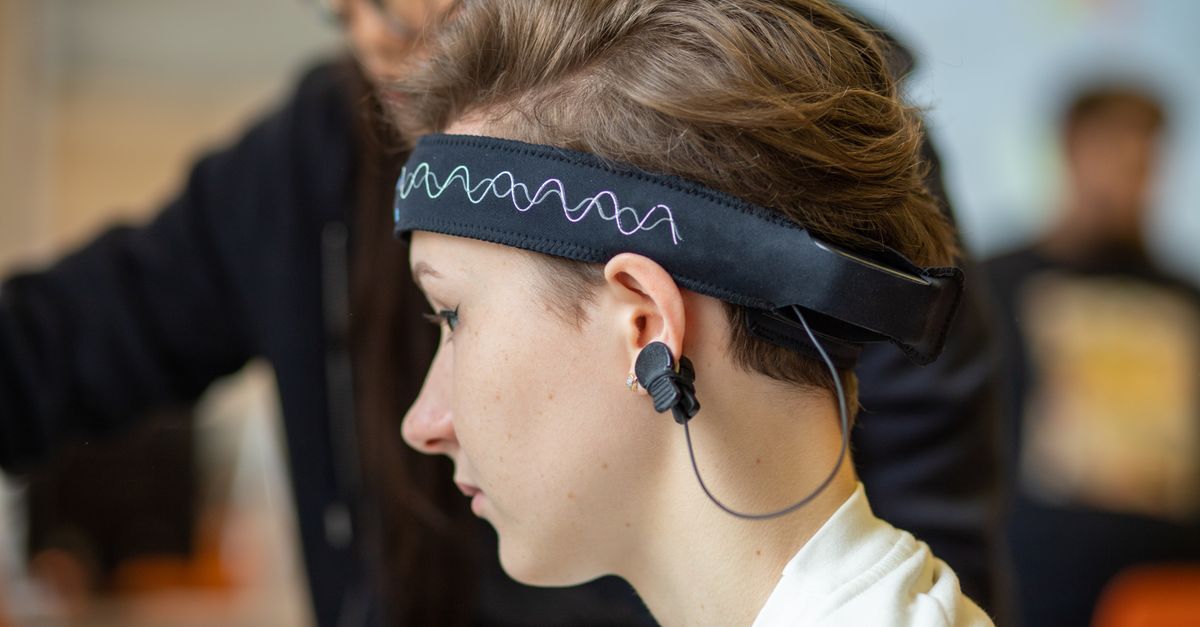
Led by Olaf Blanke and Fosco Bernasconi at EPFL's Laboratory of Cognitive Neuroscience, the researchers studied 84 people with Parkinson's disease who did not have dementia, along with 30 healthy older adults, all recruited at Sant Pau Hospital. Among the Parkinson's patients, 44% reported experiencing hallucinations. The team recorded participants' brain activity using electroencephalography (EEG), a non-invasive method that measures electrical signals via electrodes on the scalp. They then identified sleep-like slow waves and analysed their frequency, strength, and distribution across the brain. Participants also underwent cognitive assessments and interviews about hallucinations and other symptoms.
According to the EPFL report on the findings, individuals with Parkinson's disease exhibited a higher occurrence of sleep-like slow waves compared to healthy controls, irrespective of hallucination status. Among those with hallucinations, the slow waves were more pronounced, especially in frontal and central brain regions, with wave intensity correlating to hallucination severity. Increased wave frequency and strength were also linked to diminished cognitive function, including reduced attention. These results indicate that abnormal sleep-like activity during wakefulness is associated with some of Parkinson's most challenging non-motor symptoms. Importantly, the EPFL report notes, these waves can be detected with affordable, easy-to-set-up EEG methods that are comfortable for patients and readily integrated into both research and clinical practice.
The study does not establish whether these slow waves cause hallucinations or cognitive difficulties—only that they are associated with them. However, the researchers suggest that measuring these waves might help identify patients with more severe symptoms and eventually assess their risk of disease progression. Future research will investigate whether slow waves during sleep are also linked to hallucinations, and whether the changes seen during wakefulness are already present in the early phase of the disease, before typical movement symptoms appear. If so, they might represent a new target for therapies.
For university students studying neuroscience, medicine, or psychology, the study highlights how a relatively simple, non-invasive technique like EEG could become a clinical tool for monitoring non-motor symptoms in Parkinson's—a condition that affects millions worldwide. It also underscores the growing understanding that brain states we typically associate with sleep can intrude into wakefulness in ways that have real consequences for perception and cognition.