
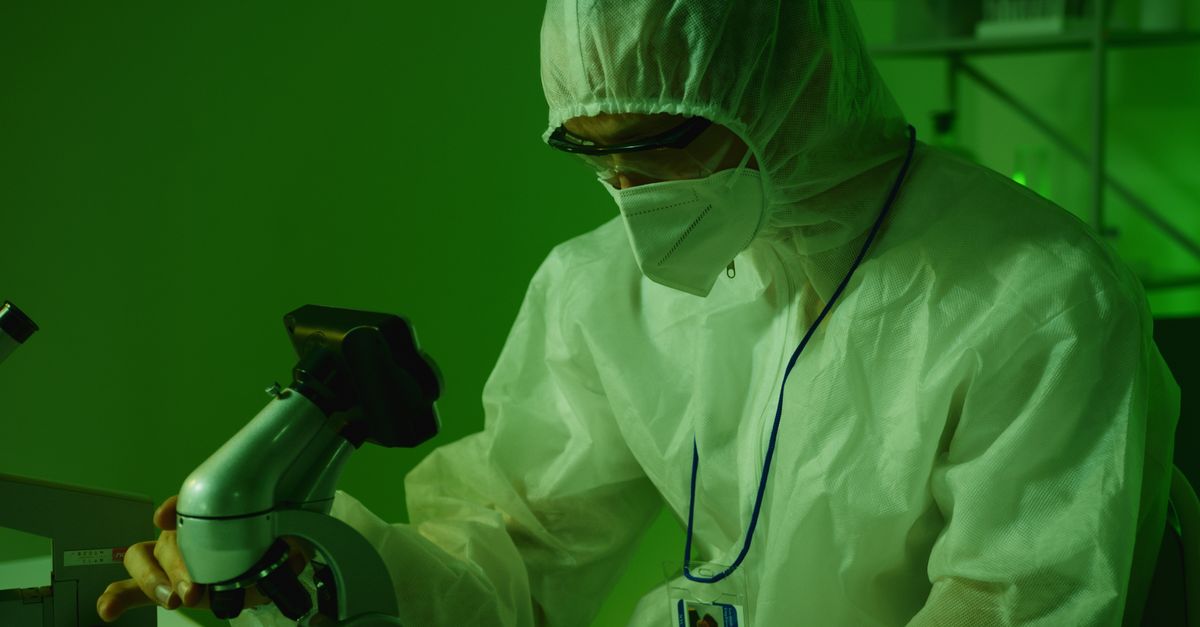
The National Institutes of Health has awarded $57.5 million to Boston University's National Emerging Infectious Diseases Laboratories (NEIDL), a high-security biocontainment facility that is one of only two such national labs in the United States, according to a university announcement.
The five-year grant, from the National Institute of Allergy and Infectious Diseases, will help the lab "develop and maintain the research resources and facilities needed to meet national, regional, and local biodefense and emerging infectious diseases research needs," the NIH said in the announcement.
Researchers at the NEIDL study some of the world's most dangerous pathogens in a Biosafety Level 4 (BSL-4) environment, the highest level of biological containment. Their work has included advancing studies on Ebola, Marburg, Zika, and SARS-CoV-2. During the COVID-19 pandemic, BU scientists illuminated the inner workings of the SARS-CoV-2 virus and identified new pathways to curb its spread.
The new funding arrives as the Democratic Republic of the Congo faces its deadliest Ebola outbreak on record, sparked by the rare Bundibugyo virus. More than 10,000 people have been infected and nearly 5,000 have died, according to the university. The outbreak has spilled across Congo's borders, and there are currently no approved vaccines or treatments for that strain. NEIDL researchers have joined an international effort to develop and test a new vaccine.
Other current projects at the lab include studies of potential antibody and small molecule treatments for dengue, a mosquito-borne virus that has recently sickened hundreds in Florida after being effectively eradicated from the US decades ago.
"Americans face a growing threat from new, emerging, and reemerging infectious diseases," said Robert A. Davey, NEIDL interim director and a professor of virology, immunology, and microbiology at BU's Chobanian & Avedisian School of Medicine, in the announcement. "This award recognizes the NEIDL's expertise and its role as a national resource, providing safe and secure high-containment facilities where our researchers work to address these threats."
The grant will directly support the lab's operations, including biosecurity systems, biosafety programs, facility maintenance, regulatory compliance, specialized biocontainment training, and advanced technical research support services. In 2024, the NIH awarded the lab $7.5 million to modernize its facilities.
Kenneth Lutchen, BU's vice president and associate provost for research, said the award is "a significant investment in the NEIDL and in the people, facilities, and expertise that make this highly specialized research possible." He added that it "demonstrates BU's ability to build and sustain the kind of research infrastructure needed to take on complex challenges at a national scale."
The NEIDL, completed in 2009, is not just a resource for BU researchers. It also attracts scientists and healthcare companies from across the country and around the world who use its secure investigative capabilities. The latest Ebola work, for example, is being conducted in partnership with a major vaccine producer.
US Senator Ed Markey (D-Mass.) said the grant speaks to the "important work Boston University scientists are doing" at the NEIDL. He referred to Massachusetts as "the Brain State" and said the lab's research affirms that: "The bright minds at the NEIDL are keeping all of us safer from future pandemics—we must ensure this funding continues."
Kendalle Burlin O'Connell, CEO and president of MassBio, a nonprofit supporting Massachusetts' life sciences industry, said the NEIDL gives the state's biotech community "the high-containment facilities and expertise needed to develop vaccines, diagnostics, and treatments for emerging infectious diseases." She added that sustaining that infrastructure "keeps us ready for the next outbreak and ensures this critical research stays in the United States."
For students, the grant underscores the scale of federal investment in infectious disease research at universities and the career opportunities that come with it. BU's NEIDL employs a specialized workforce of researchers, biosafety officers, and technical staff, and its collaborative projects with industry partners create pathways for graduates interested in virology, public health, and biodefense. The lab's work also directly affects public health outcomes that students will experience, from pandemic preparedness to the development of new vaccines and treatments for diseases that periodically resurface.