
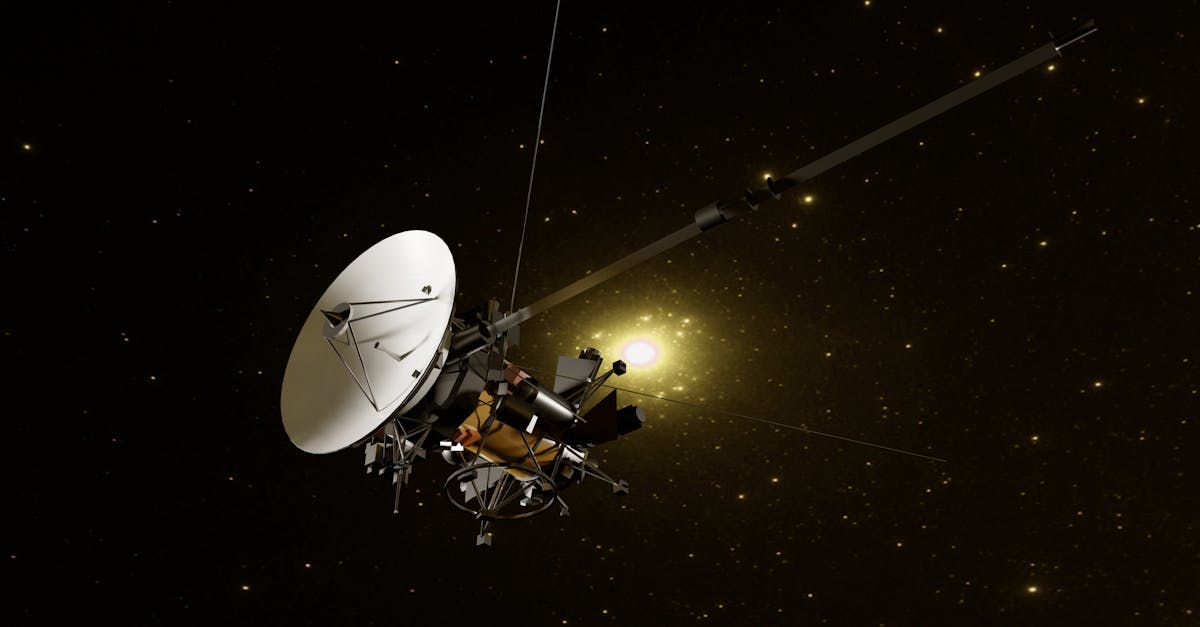
NASA has released a new documentary that traces the Europa Clipper mission from its earliest scientific roots through the challenges of building and launching the largest spacecraft the agency has ever sent into deep space. The film, titled "The Europa Concept," premiered on NASA+ on November 23 and will be available on YouTube soon, according to NASA.
The Europa Clipper spacecraft launched on October 14, 2024, and is now two years into a planned five-year, 1.8 billion-mile (2.9 billion-kilometer) journey to the Jupiter system. Once there, it will conduct flybys of Europa, an icy moon that scientists believe hides a vast subsurface ocean. The mission's primary goal is to determine whether that ocean contains the chemical ingredients necessary for life, NASA reported.
"The things we will learn from Europa Clipper will be so sensational, so fantastic, that everyone will be screaming for the next mission," said Curt Niebur, program scientist in the Planetary Science Division at NASA Headquarters in Washington, in the documentary. "The only thing that matters is that we learn enough that we, in the broadest sense, want to do it again somewhere else — because that's what exploration is."
The documentary follows the engineers and scientists who spent years developing the mission and building a spacecraft capable of surviving one of the most punishing radiation environments in the solar system. That radiation, a product of Jupiter's powerful magnetic field, may also have helped create the potentially habitable conditions on Europa, NASA noted.
Europa has been an object of scientific curiosity since Galileo Galilei discovered it in 1610, but its secrets only began to emerge with data from NASA's Pioneer 10 in 1973 and Pioneer 11 in 1974. Humanity's first detailed look at the moon came from Voyager 1's flyby in 1979, followed by observations from Voyager 2, Galileo, Cassini, and Juno. Each mission helped pave the way for Europa Clipper, NASA said.
Formal work on the mission began at NASA's Jet Propulsion Laboratory in Southern California in 2013, kicking off an 11-year effort to build the spacecraft and its suite of nine science instruments in time for a launch window dictated by planetary alignment. The team faced unexpected hurdles along the way, including a global pandemic and, just before launch, a Category 5 hurricane and tornadoes near NASA's Kennedy Space Center in Florida, according to the agency.
"With Europa Clipper, we've taken the next step in solar system exploration, which will help us uncover the mysteries of an ocean world, and ultimately, whether potentially habitable worlds beyond our own exist," said Jordan Evans, director of flight projects at JPL and the mission's previous project manager, in the documentary. "This documentary pays tribute to the ingenuity, teamwork, and dedication that continue to make this incredible mission possible."
The Europa Clipper mission is managed by Caltech's Jet Propulsion Laboratory in partnership with the Johns Hopkins Applied Physics Laboratory, which designed the main spacecraft body. Other contributors include NASA's Goddard Space Flight Center, Marshall Space Flight Center, and Langley Research Center, as well as the agency's Launch Services Program at Kennedy Space Center, NASA reported.
For university students studying planetary science, aerospace engineering, or astrobiology, the documentary offers a rare behind-the-scenes look at how a major NASA mission evolves from concept to reality — including the technical, logistical, and human challenges involved. The film is available for streaming on NASA+ and the NASA app.