
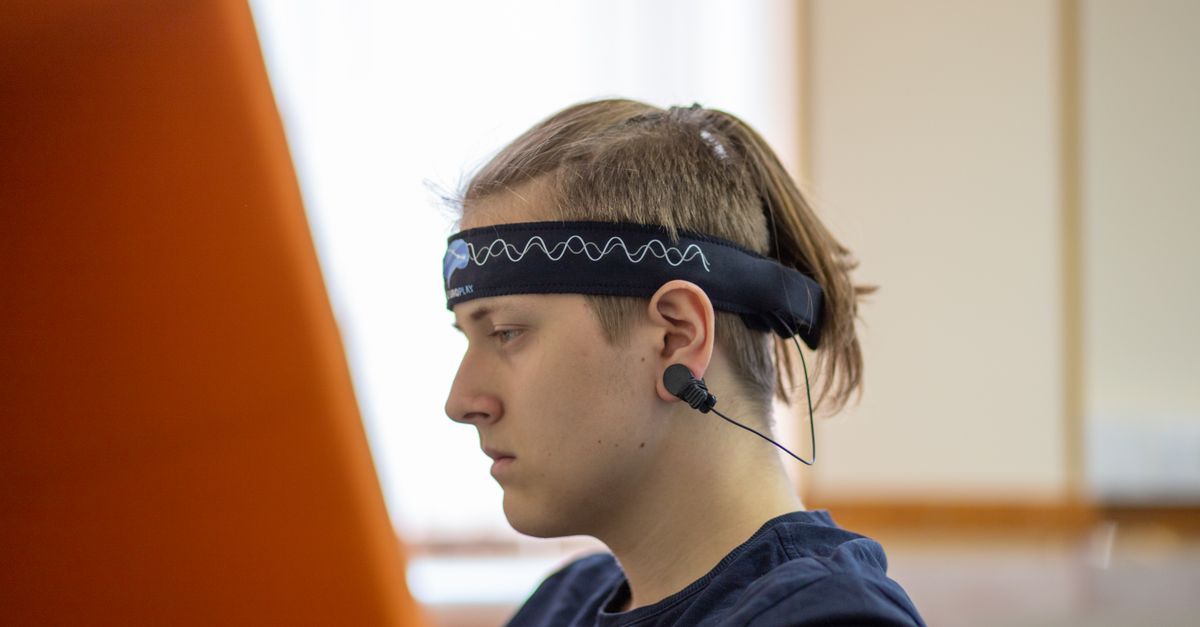
Imperial College London spinout Cogitat has been acquired by the Swiss neurotechnology company Indivi for an undisclosed sum, according to Imperial News. The deal centers on Cogitat's AI foundation model, NeuroRVQ, which translates electroencephalogram (EEG) data into read-outs of users' brain states.
Indivi, headquartered in Basel, plans to use the acquisition to become what it calls the world's leading brain AI company. Initially, the technology will help pharmaceutical companies detect whether experimental treatments for neurodegenerative diseases such as Alzheimer's are affecting the underlying biology before those effects show up in behavior, the company said.
Cogitat was founded in December 2020 to develop a brain-computer interface for controlling virtual reality games using only the mind. Its early deep learning models could recognize people's behavioral intentions in noisy EEG headset data, which is cheaper and easier to use than other brain imaging methods. The company later extended its models to interpret users' levels of attention or distraction. NeuroRVQ is intended as a general-purpose model that does for the brain what large language models do for language, Imperial News reported.
The startup, which has operations in the UK and Greece, will function as a business unit within Indivi, driving the biotech's transformation into a neuroscience-based AI company. Indivi plans to pursue applications across the life sciences and eventually consumer technology.
Cogitat's technology won first place in the EEG Transfer Learning (BEETL) competition at the NeurIPS conference, a major AI gathering. The team attributes its success to carefully designed experiments conducted at Imperial before the current AI boom.
"Public EEG archives are a valuable starting point, but they mostly capture the brain at rest. We design every experiment with a purpose: when we know what the brain was doing at each moment, we know what the model is learning," said Dr. Dimitrios Adamos, Cogitat's Chief Technology Officer and co-founder, in the Imperial News report. "A cardiologist learns most from how the heart responds to exercise. We do the same with the brain: we record it while it's at work."
The company argues that there are no shortcuts to the insights behind its patented technology, which come from hands-on data gathering and model development. "Our machine learning engineers had to go through the data-collection process themselves to understand what worked. For example, early on, some signals that looked like concentration turned out to be eye movements. Disentangling genuine brain activity from everything else in the signal is a long, laborious process," said Dr. Allan Ponniah, Cogitat CEO and co-founder.
Guilhem Dupont, CEO and Founder of Indivi, said the acquisition marks a new chapter for his company. "The brain is the most complex organ in the body, and remains one of the hardest to understand and measure. Cogitat's EEG foundation model changes that, decoding brain activity and revealing signals far closer to the underlying biology than ever before," he said. "That opens up exciting opportunities: initially the potential to provide drug developers earlier data on how new treatments are working for brain conditions, and, in the long-term, could inform the future development of next generation brain health technologies beyond life sciences."
Dr. Ponniah added: "Every brain is unique and speaks its own language. We've built an advanced AI model that works across every brain's unique language without individual training to identify subtle changes in brain activity that have not been easily identifiable before. This addresses one of neuroscience's biggest translational gaps: the failure to detect early changes in brain biology that predict whether a treatment or product will actually work."
NeuroRVQ is scheduled to be presented at the 40th Annual Conference on Neural Information Processing Systems (NeurIPS) from December 6 to 12, 2026.