
According to a joint report by the Council on Foreign Relations (CFR) and the International Rescue Committee (IRC), the world is facing an unprecedented hunger crisis driven by the convergence of geopolitical conflict and a severe climate event. The report, authored by CFR Senior Fellow Michael Werz and drawing on IRC field data, warns that disruptions to three critical maritime corridors—the Strait of Hormuz, the Bab el-Mandeb, and the Black Sea grain corridor—are compounding the effects of a powerful El Niño, threatening global food security.
The Strait of Hormuz, through which about 30 percent of the global oil supply passes, has been effectively closed to commercial shipping since February 2026 due to Iranian actions, the report states. This has driven up energy and shipping costs, interrupted aid deliveries, and threatened the supply of fertilizer crucial for smallholder farmers in East Africa, South Asia, and the Middle East. The Bab el-Mandeb, a southern gateway to the Red Sea carrying around 15 percent of global maritime traffic, is increasingly at risk from Houthi blockades, forcing ships onto longer, more expensive routes. The report notes that a Saudi oil tanker bound for Asia could spend an extra month in transit by sailing around the Cape of Good Hope, adding roughly $2.5 million in fuel costs and Suez Canal fees. The IRC reports that its own supply chain has absorbed significant cost increases, with freight on a single shipment of therapeutic milk from India to Nigeria rising by over 20 percent in August 2026. War risk insurance premiums for the Strait of Hormuz have skyrocketed from 0.25 percent to up to 10 percent, meaning a large oil tanker could pay as much as $20 million in insurance to transit the strait.
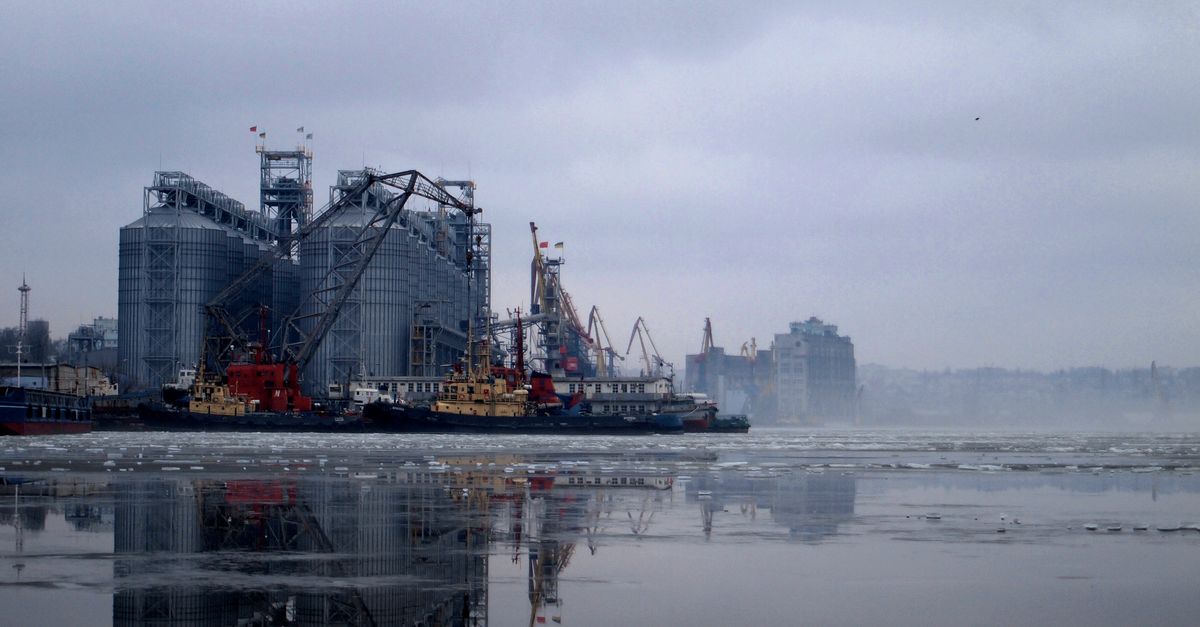
The third chokepoint is the Black Sea grain corridor, whose ports account for nearly 30 percent of global wheat exports. Escalating disruption to these export routes, now considered even riskier for vessels than the Middle East according to shipowners and seafaring groups, is undermining the global grain supply and humanitarian operations, including the Grain from Ukraine program, which has sent hundreds of thousands of tons of wheat to countries like Somalia, Sudan, and Yemen since 2022.
Compounding these disruptions is an unprecedented super El Niño event, expected to eclipse the strongest on record and threaten Latin America, Eastern and Southern Africa, Asia, and the Pacific with drought, heat, flooding, and destroyed harvests well into 2027. The report notes that the 2014–16 El Niño prompted more than $5 billion in humanitarian appeals and affected sixty million people, but the current predictions dwarf that impact. The African Development Bank warns the economic toll across Africa alone could reach $20 billion, while the International Chamber of Commerce warns that El Niño-driven weather failure across critical global breadbaskets threatens 60 percent of the world’s calories.
The UN World Food Program determined earlier this year that if the escalation in the Middle East continues to destabilize the global economy, forty-five million more people would go hungry. An additional forty-nine million people could be pushed into acute food insecurity by the end of next year due to the adverse impact of El Niño on global agriculture. These millions would add to the nearly 320 million people already facing hunger in 2026, all against a backdrop of falling aid funds.
The report highlights specific countries already experiencing the crisis. In Sudan, which has ranked first on the IRC’s Emergency Watchlist for three consecutive years, El Niño-related drought now affects more than half the country and half its cropland. The IRC reports that the price of sorghum, a key staple, more than doubled between January and August, while fuel prices have doubled since February. Nearly twenty million Sudanese are already experiencing crisis-level food insecurity, and the risk of famine is growing. The Integrated Food Security Phase Classification (IPC) has identified extremely critical levels of acute child malnutrition in Darfur, alongside growing starvation risk across Greater Darfur and Greater Kordofan. In one North Darfur town, admissions for severe acute malnutrition have doubled compared to last year.
In Somalia, households face a double climate risk from a newly confirmed Indian Ocean Dipole and El Niño, bringing rains and floods after extended drought. Flooding in Mogadishu has damaged an IRC-supported health center, and mid-October flash flooding in the Mudug region alone displaced 12,000 people. IRC modeling shows up to 2.6 million people across the country could be at immediate risk. In Baidoa, sorghum and maize prices have risen by nearly 70 percent and 90 percent over the past year, respectively. According to the IPC, 5.4 million individuals are expected to experience crisis-level hunger or worse by December 2026, an increase of 300,000 from September. In the next year, an estimated two million children will suffer from acute malnutrition. In Central America, this year's harvest has already been ruined by El Niño, and the next harvest is endangered by the disruption from the Hormuz closure. The Famine Early Warning Systems Network indicates that diesel costs have surged over 60 percent relative to last year, and fertilizer expenses are increasing. An IRC evaluation in a single community in San Marcos, Guatemala, predicts a 70–85 percent reduction in the November 2026 harvest. In four other communities evaluated by the IRC within the same department, 75–100 percent of subsistence maize and bean crops were ruined due to delayed and erratic rainfall. In El Salvador, households in northern and southern Morazán and northern San Miguel told IRC teams they were eating through reserves meant to last six months and selling livestock at a loss, with some families having nothing left to sell.
In Haiti, an IRC needs assessment conducted in September 2026 found that two-thirds of households had poor or borderline food consumption, and three-quarters had taken on new debt to meet immediate needs. Gang violence is growing in tandem with fuel, freight, and transportation costs. With El Niño expected to reduce the fall, winter, and spring harvests, humanitarian needs will reach their peak in early 2027.
The report argues that catastrophe is not inevitable and calls for urgent action by the international community. It recommends surging funding to emergency humanitarian responses where shocks have already arrived, noting that Sudan’s response plan remains less than half funded and Somalia’s is only about one-third funded. The report also emphasizes acting before emergencies escalate, citing evidence that early cash transfers in Somalia in 2024 made families 66 percent more likely to have crop reserves and 39 percent more likely to repay debts than families who did not receive them. The consequences of waiting are also known: during Somalia’s 2010–12 drought-induced famine, some 250,000 people died, many before the world caught up to the unfolding catastrophe despite repeated warnings.