
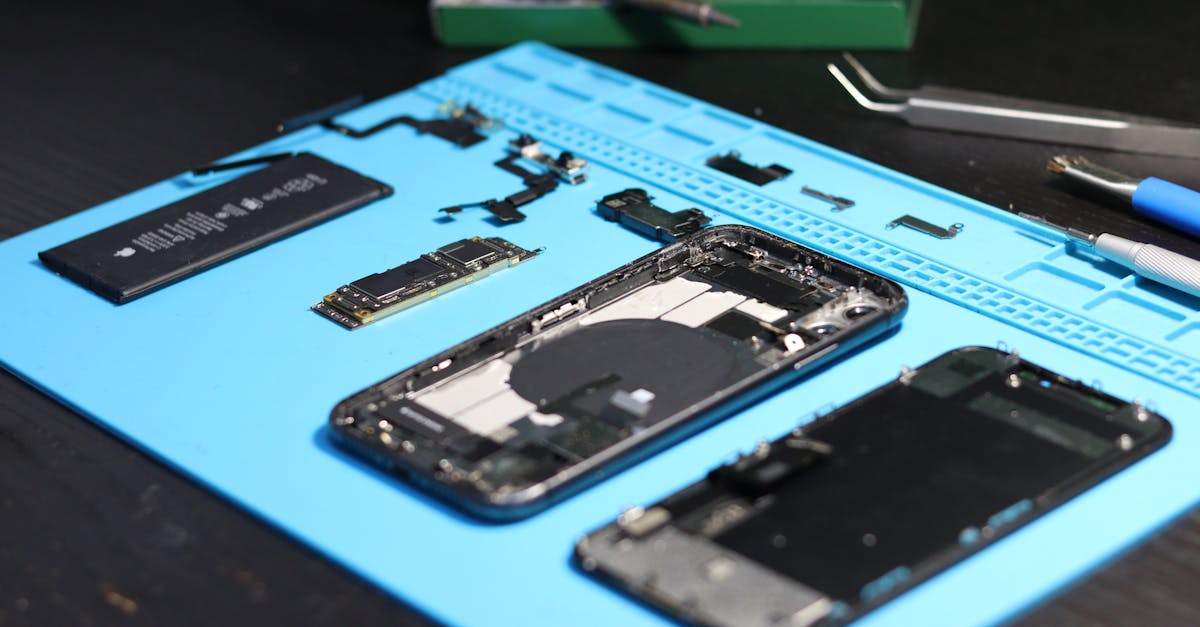
Electronics and household appliances sold in the European Union are set to become cheaper and easier to repair under a new law that tightens repair requirements for manufacturers. The Right to Repair Directive, recently introduced in EU member states, aims to reduce the growing mountain of electronic waste by making repair a more attractive option than buying new products.
According to Lund University, the directive requires manufacturers — including those from the US, China, and elsewhere that import products into the EU — to offer repairs at a reasonable price and within a reasonable period. For students and young consumers who frequently upgrade phones, laptops, and other devices, the change could mean lower long-term costs and fewer devices ending up in landfills.
Carl Dalhammar, a professor and researcher at the International Institute for Industrial Environmental Economics at Lund University, has studied the issue for two decades. He told Lund University that the directive represents "the beginning of the end of the throwaway society."
Dalhammar and his colleagues have examined why products are often difficult or uneconomical to repair. They point to several factors: expensive spare parts, a lack of spare parts, insufficient competition, and poor design that makes repairs time-consuming. Manufacturers also employ strategies that discourage repairs, such as digital repair locks, restrictions on the use of second-hand spare parts, and a reluctance to supply parts to independent repairers.
The EU already has some repair requirements in place. For mobile phones and tablets, rules that came into force in 2025 include durability requirements measured through drop tests, requirements for software updates for five years after a product is placed on the market, and requirements giving independent repairers access to spare parts. A mandatory energy label now also shows consumers how repairable a phone is and how it performs in drop tests.
Additional legislation is also contributing to the shift. The EU Battery Regulation stipulates that from 2027, consumers must be able to replace batteries themselves in products such as laptops. The new Right to Repair Directive entitles consumers to a 12-month extension of the statutory guarantee after a repair is carried out.
"The rules will have an impact, but many of them are new, so we don't yet know how significant that impact will be," Dalhammar said.
Despite the progress, researchers say more is needed. Resource extraction is increasing by two per cent a year, and under current trends, the amount of waste generated is expected to double by 2060. Dalhammar noted that repairs remain expensive. Some countries, such as Austria, have introduced repair vouchers that subsidise the cost of repairs for consumers. A Swedish government inquiry concluded that Sweden should consider similar vouchers, but no action has been taken since.
Research suggests that tougher regulations, stronger market surveillance, greater standardisation of components, and better economic incentives for sustainable product design are all needed. The structure of the market itself also requires change.
A recent study by Dalhammar and colleagues, titled "Can the European Ecodesign Regulatory Framework mitigate the systemic unrepairability of electronics? Insights from repair businesses," surveyed repair businesses about the new EU rules. Those interviewed said the rules have made products easier to repair but do not go far enough. Spare parts can still be expensive, and there is a shortage of qualified repair technicians in some areas. In many cases, it remains easier to buy a new product than to repair an old one.
The study also found that repair businesses struggle to recruit workers. "Measures are also needed to make repair work a more attractive profession," Dalhammar said. "Policymakers take it for granted that increased demand for repairs will lead to more repair technicians. Better working conditions and investment in training have a role to play in developing the repair sector."
Asked whether the directive means the end of the throwaway society, Dalhammar replied: "No, but it is a first step." He explained that the next step may involve questioning which products should be allowed on the market in the first place. One of his ongoing research projects concerns "exnovation" — the planned phase-out of unsustainable products. One product category being studied is "ultra-fast fashion," clothing with a high environmental impact often worn only a few times. France has already introduced measures aimed at making such products less attractive to import and market.
In another project, researchers at the International Institute for Industrial Environmental Economics are examining how producer responsibility could be expanded to create stronger incentives for manufacturers to design products that are easier to repair.
For university students, many of whom are on tight budgets and rely heavily on electronics for their studies, the directive could mean longer-lasting devices and lower replacement costs over time. It also opens potential career paths in the growing repair sector, though the industry currently faces a shortage of skilled technicians.