
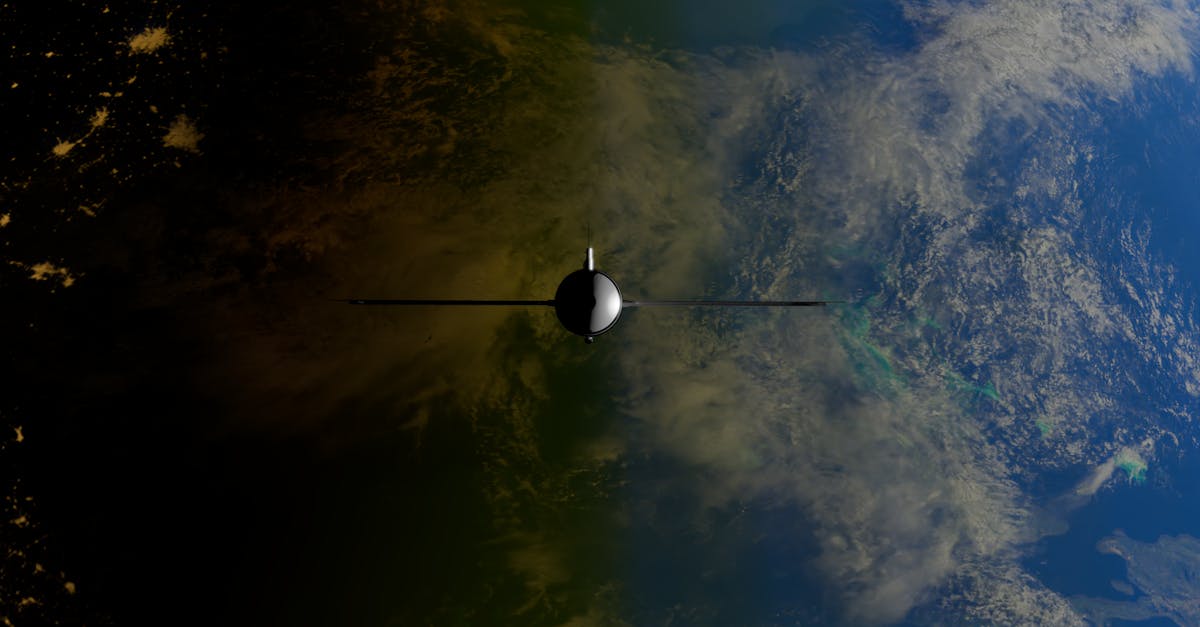
The European Space Agency (ESA) has given the green light to Plasma Observatory, an ambitious seven-spacecraft mission designed to investigate how energy is transferred and transformed in space plasmas, according to a Queen Mary University of London announcement. The mission, selected as ESA's next medium-class science mission by its member states, aims to tackle some of the biggest unanswered questions in space physics.
Plasma Observatory will focus on understanding how particles become energised in shockwaves, turbulence and magnetic reconnection, and how energy flows through Earth's magnetosphere. These processes are responsible for phenomena ranging from space weather—which can disrupt satellites and power grids on Earth—to some of the most energetic events in the Universe.
Dr Heli Hietala, Royal Society University Research Fellow and Senior Lecturer in Space Plasma Physics at Queen Mary, has been involved with the mission since its original conception and proposal, the university reported. During the most recent two-year study phase, she worked within the mission's core team, helping to prepare the scientific and technical materials that were assessed during ESA's review process. Several other researchers from Queen Mary's Space and Astrophysical Plasmas Group also contributed to the mission development through their work during the study phase.
"This selection is an important milestone for Plasma Observatory and excellent news for Queen Mary," Dr Hietala said in the announcement. "The mission's scientific objectives are closely aligned with the research strengths of our plasma physics group: understanding these processes, their impacts as well as multi-spacecraft techniques. I have been involved in the mission since its earliest stages, and it has been a privilege to contribute to the development of a mission concept that has the potential to transform our understanding of fundamental plasma processes throughout the Universe."
For university students interested in space physics or astrophysics, the mission represents a significant opportunity. Plasma Observatory's selection reinforces Queen Mary's growing reputation in space science and astrophysics, with researchers contributing to international collaborations that address some of the most challenging questions about the nature of the Universe. Students considering postgraduate research or careers in space science may find that institutions involved in such high-profile ESA missions offer unique pathways into the field, from hands-on data analysis to spacecraft instrument development.
The mission's focus on plasma—a state of matter consisting of charged particles that makes up more than 99% of the visible Universe—means its findings could have implications far beyond Earth's magnetosphere. Understanding how energy flows through plasmas could shed light on processes occurring in stars, supernovae and the vast spaces between galaxies.
Plasma Observatory is expected to launch in the early 2030s, according to ESA's planning timeline. The seven-spacecraft configuration will allow scientists to observe plasma processes at multiple scales simultaneously, something that single-spacecraft missions cannot achieve. This multi-point measurement capability is considered essential for untangling the complex interactions that govern how energy moves through space.
Queen Mary's Space and Astrophysical Plasmas Group has built a strong track record in this area, with researchers contributing to previous ESA missions and developing advanced techniques for analysing data from multi-spacecraft constellations. The group's expertise in understanding fundamental plasma processes and their impacts was a key factor in its involvement with Plasma Observatory, the university stated.
For students currently studying physics, engineering or related disciplines, the mission timeline means that those entering university now could be well-positioned to contribute to Plasma Observatory's data analysis and scientific output during their postgraduate careers. The mission's selection also highlights the growing importance of international collaboration in space science, with researchers from multiple countries working together to design, build and operate the spacecraft and its instruments.
More information on the mission is available on ESA's website.