
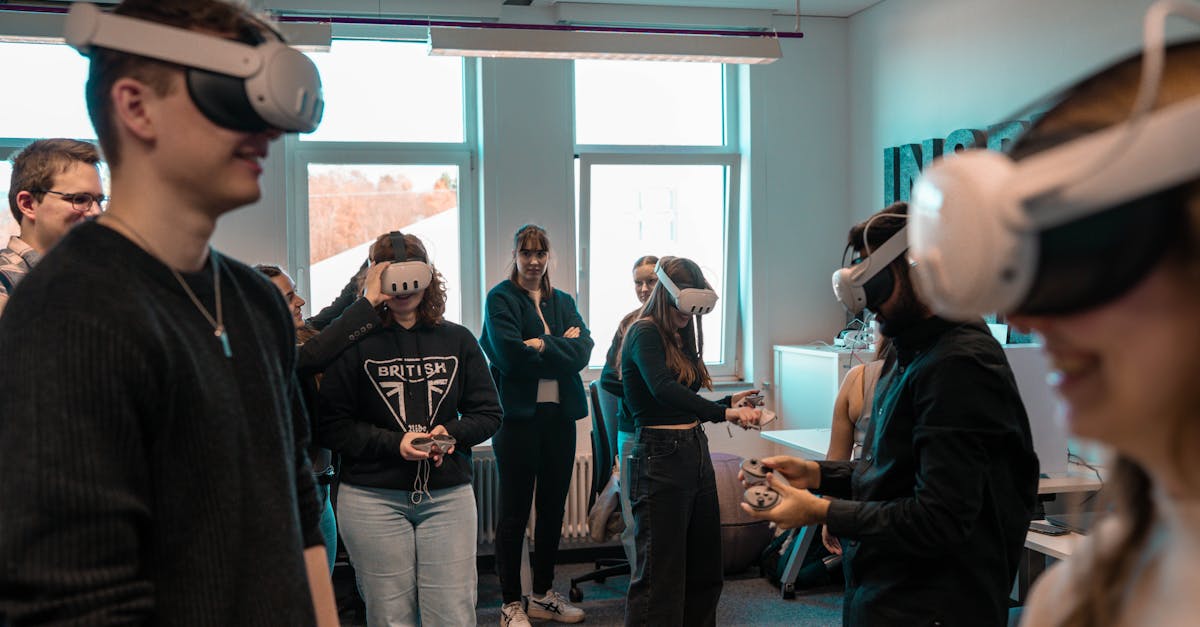
Arizona State University’s Dreamscape Learn, an immersive virtual reality platform that first launched in 2022 with biology labs, has expanded to cover art history, chemistry, sustainability, and astronomy, with modules for music theory and microeconomics in development, according to ASU News.
More than 11,000 ASU students now use Dreamscape Learn each semester, and the initiative has also extended to K–12 schools and other colleges across the United States. The platform was created in collaboration with Dreamscape Immersive, a company co-founded by Hollywood producer Walter Parkes ("WarGames," "Gladiator," "Twister"). ASU has built an in-house production studio staffed with professionals from film, television, and gaming to design the experiences.
“To me, this expansion is about opportunity,” said Lisa Flesher, chief of Realm 4 Initiatives at EdPlus, in the ASU News report. “Dreamscape Learn lets students go places — inside the body, across continents, into moments in time — that a classroom could never take them. Expanding Dreamscape Learn means more students, not just a fortunate few, get to have that experience.”
In the art history module, students take on the role of a research assistant to decode hieroglyphs and then act as an art historian, researching an object. They virtually visit the Hagia Sophia Grand Mosque in Turkey, a 1,500-year-old building that has transitioned from a Byzantine church to a mosque, then a museum, and now a mosque again. The VR experience shows reconstructions of what mosaics may have looked like in the past, as well as the Parthenon in its original painted colors.
“What I learned is that after VR, students would remember terms that I would normally have to force them to memorize. They would intuitively remember it because they experienced it and they understood why it was significant rather than me writing it on a board and them having to fill in the definition,” said Chelsea Haines, an assistant professor of art history and museum studies who helped develop the modules, as quoted by ASU News.
Students who have tried the modules reported positive experiences. Alejandro Anaya, an art major enrolled in Art History 101, told ASU News: “I really love Dreamscape and how it's not just sitting in a lecture, but you're in a whole experience where you get to see this world virtually. You’re not just sitting down and doing the homework, but having a really great experience. It feels lifelike.”
Maci Minardi, an art education major, said she was initially disappointed that the VR experiences were only for science majors, but was happy to try the art history module. “It floats you up, and it looks like you’re really there,” she said.
According to ASU News, data from the university’s Action Lab, which studies teaching and learning strategies, found that biology students who used Dreamscape Learn showed improved outcomes. The study analyzed more than 4,000 on-campus students from Biology 181 and 182 over four terms, from fall 2022 through spring 2024. Students rated the VR experiences a median of 5 out of 5 across all semesters, and average lab assignment grades were 90% or higher across all demographic groups. Students who took BIO 181 after Dreamscape Learn was implemented saw a one-fourth letter grade improvement in their final course grade in BIO 182 compared to their grade in BIO 181. Additionally, those students were more likely to remain in School of Life Sciences majors and had higher grades in subsequent 300-level genetics courses than students who took the courses before Dreamscape Learn was added.
John VandenBrooks, associate dean for immersive learning at EdPlus, told ASU News that the goal is to make students the central characters in the problems they are solving. “It’s all about making the student the central character in the problem they are solving. They become the agent of their own education — they're the biologist, the chemist, the art historian,” he said. “The first day you're here at ASU, you should know why you're learning everything and be applying your skills to solving novel problems.”
For university students considering their options, Dreamscape Learn represents a growing trend in higher education: using immersive technology to boost engagement and learning outcomes. While the platform is currently unique to ASU, its expansion to other institutions suggests that similar VR-based learning tools may become more common, potentially reshaping how courses like art history and biology are taught.