
Tipping points are usually discussed as threats — the collapse of the Amazon rainforest, the melting of major ice sheets — but a new research project funded by the European Research Council will flip the concept around, asking whether the same self-reinforcing dynamics could be harnessed to accelerate positive change for the climate and nature.
According to Wageningen University & Research, Professor Marten Scheffer and three international colleagues have been awarded an ERC Synergy Grant of almost €10 million for a six-year project called GROUNDSWELL. The team will study how positive tipping points emerge in society and how they might be triggered deliberately.
Scheffer, a professor at Wageningen, told the university that the project is a natural continuation of his recent book Tipping out of Trouble (published in Dutch as De Kanteling), in which he argues that it is still possible to turn the tide on climate change and biodiversity loss — but only under certain conditions. "This project is the follow-up to my book that I had dreamed of," Scheffer said. "Over the next six years, we will investigate where the greatest opportunities for positive tipping points lie, so that governments and non-governmental organisations can put this knowledge to use."
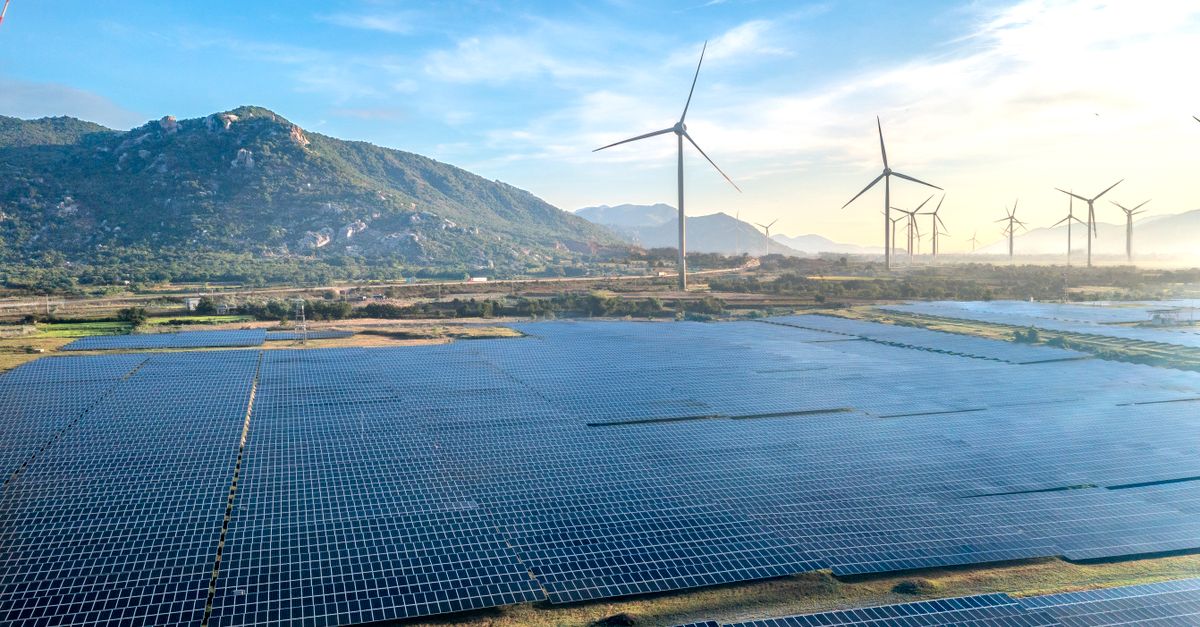
The concept of a positive tipping point is not hypothetical, the researchers say. The transition from fossil fuels to renewable energy offers one example: as new technologies become more attractive, more people adopt them, policies adapt, and the shift can accelerate on its own. GROUNDSWELL aims to understand the conditions that enable such transformations, how different changes can reinforce one another, and where the greatest opportunities lie.
The project is led by Scheffer (Wageningen University & Research), Tim Lenton (University of Exeter), Johan Rockström (Potsdam Institute for Climate Impact Research) and Elke Weber (Princeton University). The team will focus on transitions in areas such as energy and food systems.
Within GROUNDSWELL, the Wageningen researchers will pursue two distinctive lines of research, Wageningen reported. First, they will analyse vast amounts of language data to identify shifts in public attitudes — changes in how people think and talk about particular issues may provide early indications that a larger societal transformation is approaching. Second, they will work with historians to study a wide range of societal tipping points from the past, systematically comparing transformations both large and small to identify patterns that explain why some developments suddenly accelerate while others do not.
The project also means that Scheffer will return to Wageningen part-time after his retirement. "I never intended to stop working altogether," he said. "This gives me the opportunity to help others push the boundaries of research."
For university students studying environmental science, policy, or sustainability, the GROUNDSWELL project represents a significant investment in understanding how social and technological change actually happens — knowledge that could shape future careers in climate policy, renewable energy, and conservation. The findings may also influence how student-led climate movements and campus sustainability initiatives think about strategy: if small changes can trigger large, self-reinforcing shifts, then even modest actions on campus could have outsized effects.
The researchers ultimately hope to gain a better understanding of how positive societal transformations emerge and how they can be accelerated. "Because if small changes can have major consequences," Wageningen noted, "they may also offer opportunities to give our future a decisive push in the right direction."