
During the early days of the COVID-19 pandemic, Chris Ozyck, associate director of Yale's Urban Resources Initiative (URI), found himself reflecting on how to spend his time meaningfully. Driving through New Haven, he noticed that many trees in the city's wooded areas were tightly wrapped in invasive vines — non-native bittersweet, Asiatic honeysuckle, and porcelain berry — that were strangling the trees and threatening to pull them down, according to Yale News.
"I came to this realization that saving big trees was something I could do, and something I could quantify," Ozyck told Yale News. "By stewarding a tree and preventing it from going into decay, I could actually quantify my carbon for the day and feel like I was doing something meaningful."
That realization sparked a large-scale de-vining effort across New Haven's parks. Ozyck rallied volunteer groups, teaching them a simple technique: clip the vines at the base and as high up as possible. Six years later, the health of the city's parks has improved dramatically, Ozyck said. "Edgewood Park, for example, had massive bittersweet, like the size of your arm, all throughout. Now you walk through Edgewood and you can barely find bittersweet. It hasn't regrown. It hasn't retaken over everything. So that's phenomenal."
URI is both a program of the Yale School of the Environment (YSE) and a nonprofit guided by a local board of directors, Yale News reported. It has been operating for 37 years, engaging more than 6,000 volunteers and 572 Yale interns to date. The initiative works closely with the New Haven Parks Department on two main programs: the Tree Planting Program and the Greenspaces Program.
The Tree Planting Program has planted some 14,000 trees across city neighborhoods. Any resident — homeowner or renter — can request a free tree for the curb strip in front of their home, with the commitment to water it during growing seasons for the first three years. URI's GreenSkills crews, which include paid high school interns, adults facing employment barriers, and Yale students, plant about 1,000 trees annually. "We're known as the 'tree people' around New Haven," Ozyck said.
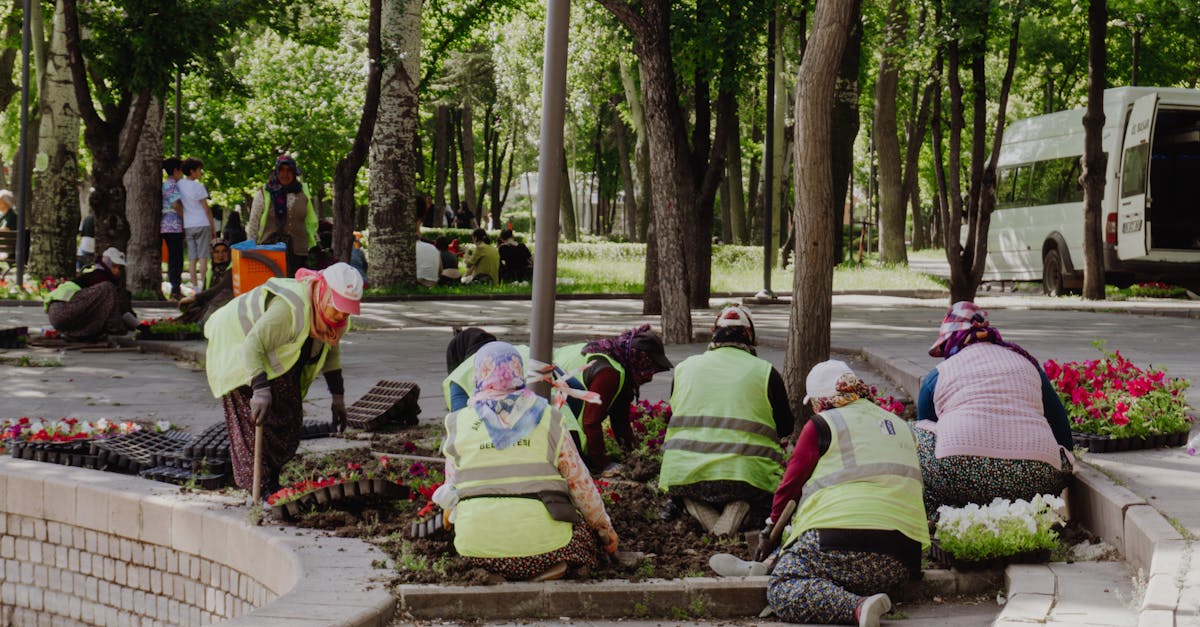
The Greenspaces Program provides volunteers with materials and technical support to remove invasive plants from parks and replant native species. Neighborhood groups can also request help restoring vacant lots and streetscapes into green spaces. Max Webster, New Haven's parks director and a 2017 YSE graduate, told Yale News that URI's partnership helps engage residents in the stewardship of public spaces.
Yale College senior Annabelle Brothers, a green space intern with URI, emphasized the broader value of these efforts. "Green space contributes to happiness in cities, health in cities, lifestyle in cities," she told Yale News. "Our green spaces, our parks, are places where people come together and bump elbows with neighbors."
The de-vining project has expanded to 17 city parks. Volunteers like Frank Cochran and Andrea Knies spend Tuesday mornings scanning woods for invasive vines, cutting them at two levels to give trees a better chance. "I personally care most about the young trees because it's a life-or-death matter for them," Knies told Yale News. "Basically, it's an endless fight."
URI also places Yale interns with volunteer groups, creating what Ozyck described as "mutual pathways of learning." He said community members share their knowledge with students, while students bring ideas from the university into practice.
The program's strong community ties have also enabled research. A YSE research team, led by Marlyse Duguid, the Thomas J. Siccama Senior Lecturer in Field Ecology, is studying beech leaf disease, which first appeared in Connecticut in 2019 and is now prevalent statewide, including in New Haven parks. The disease, caused by a foliar nematode, can be fatal, especially to younger trees, and has no known treatment, Yale News reported.
Duguid's team is testing whether removing diseased beech trees, planting native trees, and installing deer fencing can help young trees survive and increase native plant diversity. They set up 27 experimental stations at three city parks with help from URI's volunteer groups. At one site in East Rock Park, diseased beech trees were cut down in early spring, and researchers are monitoring whether the canopy gaps allow native species like black cherry and black birch to thrive.
"There is still so much we don't know about beech leaf disease," Duguid told Yale News. "Maybe the trees are all going to die, maybe they're going to come back. Maybe they're just going to look bad for a long time. No one really has the answers, so we're right at the edge of this."
For students at Yale and other universities, URI's model offers a tangible example of how academic institutions can partner with local communities to address environmental challenges. The program shows that hands-on stewardship — from cutting vines to planting trees — can produce measurable results while building connections between campus and city.