
A Yale University program is offering undergraduates from outside the Ivy League a paid, eight-week summer research experience in the environmental sciences, providing what its director describes as a crash course in scientific practice at a top-tier research institution.
The Summer Undergraduate Research in the Environmental Sciences (SURES) program, run by Yale’s Institute for Biospheric Studies (YIBS), accepts about 11 rising juniors and seniors each year from four-year colleges and universities in the United States and abroad. Yale College students are not eligible. Since its creation five years ago, 54 undergraduates have participated, including students from the University of New Haven and Gateway Community College, according to Yale News.
Participants conduct research, analyze data, and present results under the mentorship of YIBS-affiliated faculty. The program covers a wide range of topics: past cohorts have studied lungless salamanders, new species of black basses, the lifeways of ancient peoples in Malawi, and the microbiomes of marine life.
Martha Muñoz, associate professor of ecology and evolutionary biology and director of the program, said the experience is designed to give students exposure to fieldwork, lab work, and the professional skills scientists need. “It’s a crash course in being a scientist at one of the world’s top universities,” Muñoz told Yale News. “The program gives students exposure to the field, the lab, and the soft skills that scientists need to succeed. It can be a life-changing opportunity for undergraduates interested in studying the environmental sciences.”
For students, the immersive nature of the program is a key draw. Kylie Miller, a rising senior at Cornell University majoring in atmospheric science when she participated in the summer of 2025, worked with Jennifer Marlon, a climate science researcher at the Yale School of the Environment. Miller explored the links between temperature extremes and drought. She told Yale News that the internship allowed her to focus entirely on research, unlike her previous experience balancing classes, clubs, and other commitments. “Things weren’t laid out for me step by step,” Miller said. “I learned a lot about the process of developing a research question, developing the methodology, and then figuring out how to interpret my results.” Miller is now pursuing a master’s in environmental science at the Yale School of the Environment.
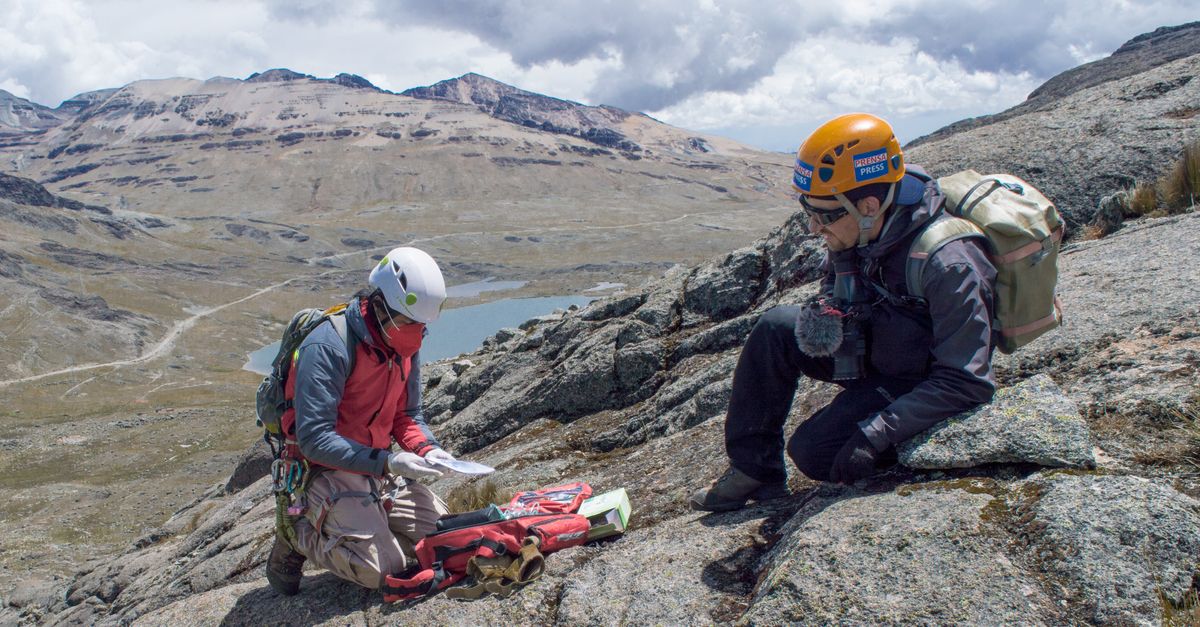
Piero Bello De Lillo, an undergraduate at the Universidad Autónoma de Santo Domingo in the Dominican Republic, spent last summer searching for endangered rain frogs on Pico Duarte, the Caribbean’s highest peak, with Isabela Hernández-Rodríguez, a Yale Ph.D. student in ecology and evolutionary biology. The fieldwork involved traveling on mules over rough terrain and listening for the frogs’ high-pitched, insect-like calls. Although they did not find any of the elusive amphibians, Bello De Lillo said the experience was invaluable. In the lab, he learned DNA extraction, sequencing, and phylogenetic analysis, and developed a research project on a lizard native to Hispaniola. “It was my first experience in that kind of molecular research environment, and I really enjoyed connecting laboratory techniques with ecological and evolutionary questions,” Bello De Lillo told Yale News. “SURES helped me clarify the kind of scientist I want to become. It strengthened my interest in evolutionary ecology and physiological research, encouraged me to pursue graduate studies, and allowed me to build connections with researchers at Yale.”
The program is one of several initiatives supported by YIBS, which celebrates its 35th anniversary this year. YIBS also provides support to postdoctoral researchers and visiting scholars, as well as grants for research projects by Yale students and faculty. Eric Sargis, YIBS director and professor of anthropology, said the program was created to expand training to undergraduates and provide access to research opportunities that might not otherwise exist. “The program has been overwhelmingly successful and is often a transformative experience for the students involved,” Sargis told Yale News. “It’s truly remarkable to see how students grow as researchers between their arrival for the first day of orientation and their presentations at the symposium we have at the end of the program.”
Hernández-Rodríguez, who mentored Bello De Lillo in the field, said the program enriches both the students and the science they contribute to. “Bringing together students from different backgrounds and parts of the world enriches both their experiences and the science they contribute to,” she told Yale News. “My fieldwork can be very ‘extreme’ — like visiting the highest peak in the Caribbean to find a frog that has not been seen since the 1980s — but incredibly exciting. It’s priceless to embark on these kinds of adventures with a young scientist and have these new experiences with them firsthand.”
Muñoz added that the program benefits Yale as much as the students. “More perspectives improve the science,” she said. “We usually think of that in the context of collaborators at the professorial, graduate, or postdoctoral level, but it’s also true at the undergraduate level. Inviting students from different institutions and different countries to come here naturally expands and improves the quality of our work.” She described the arrival of the interns as a moment when “the campus comes alive,” with students collaborating and sharing ideas. “There are ripples that will play out for years to come through the alchemy of all these students coming together,” Muñoz said. “I’ve seen it firsthand.”
For university students considering research careers, the SURES program offers a concrete pathway to gain hands-on experience at a leading research university, build professional networks, and clarify academic and career goals — all with financial support.