
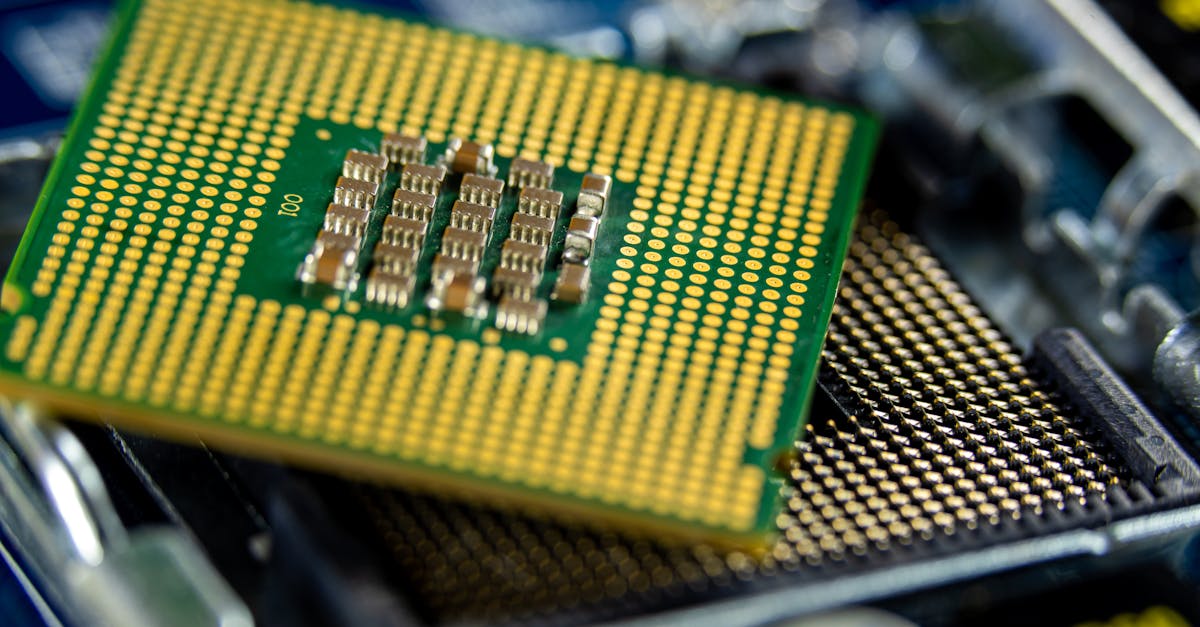
Jensen Huang's downfall may not be the cause of an AI bubble bursting. It could, however, be the event that reveals how fragile the foundations of that boom have become.
I. The King Who Promised an Infinite Future
For much of the artificial intelligence revolution, Jensen Huang appeared to have accomplished something almost unprecedented in modern capitalism: he had made himself indispensable not merely to a corporation, but to an entire technological epoch.
As the co-founder and chief executive of Nvidia, Huang presided over the transformation of a company once associated primarily with graphics processors for video games into the indispensable infrastructure supplier of the AI economy. His company's chips became the computational foundation upon which the ambitions of Microsoft, Google, Amazon, Meta, OpenAI, and countless smaller enterprises increasingly depended. While technology executives competed to develop the most sophisticated artificial intelligence models, Nvidia occupied a more enviable position: it supplied the machinery that made their competition possible.
Huang's commercial achievement was genuine. He recognized earlier than many competitors that graphics processing units, originally developed for rendering images, could become extraordinarily powerful instruments for parallel computation. Nvidia's CUDA software ecosystem reinforced its hardware advantages, making the company's technology difficult to replace even when competing chips offered attractive specifications. This was not simply a fortunate bet on a fashionable technology. It represented years of investment, technological foresight, and organizational discipline.
Yet the company's extraordinary success also produced a more precarious phenomenon. Huang gradually became something more than the chief executive of a semiconductor company. He became the most recognizable evangelist of an economic transformation whose ultimate commercial dimensions remained uncertain.
The transformation was visible in the language surrounding Nvidia. Semiconductor demand was no longer merely a function of customers' computing requirements; it became evidence of humanity's inexorable progress toward an intelligent future. Data centers were described as factories of intelligence. Capital expenditures that would once have appeared extravagant were reframed as necessary investments in a new industrial revolution. Investors increasingly treated the continued expansion of AI infrastructure as an economic inevitability rather than a commercial hypothesis requiring repeated verification.
For a time, the distinction seemed immaterial. Nvidia's financial performance was extraordinary, and investors were rewarded for believing that demand would keep accelerating.
Then, in November 2026, the man who had come to personify that confidence suddenly departed.
On November 12, Nvidia announced that Huang had resigned as president, chief executive, and director. The company appointed its longtime chief financial officer, Colette Kress, as interim chief executive and began searching for a permanent successor. The resignation followed reporting about Huang's extramarital relationships and allegations involving a woman suspected by US authorities of having connections to Chinese intelligence.
Those intelligence allegations remain disputed and unproven publicly. Reuters reported on November 19 that Huang had not been accused of criminal wrongdoing, and that it could not independently verify the intelligence allegations. The existence of investigations must not be confused with a determination of guilt.
Nevertheless, the corporate consequences were unmistakable. The figure who had represented continuity, confidence, and relentless technological ambition was no longer in command. Nvidia's stock had fallen sharply, erasing hundreds of billions of dollars in market capitalization. On November 17, the company's chairman publicly ruled out reinstating Huang as chief executive.
The personal scandal and the industrial crisis are not the same thing. But their coincidence forces a consequential question: Was Huang's downfall merely an extraordinary episode of corporate governance, or did it remove the figure whose credibility had helped sustain one of the largest speculative investment cycles in economic history?
The answer lies less in Huang's personal conduct than in the financial architecture that developed around Nvidia during his extraordinary ascent.
II. The Paradox of a Company That Was Too Successful
The most inconvenient fact for anyone predicting Nvidia's imminent collapse is that its underlying business remains exceptionally profitable.
On November 17, five days after announcing Huang's departure, Nvidia reported fiscal third-quarter revenue of $115.8 billion, more than double the corresponding figure a year earlier. Its data-center business generated $107.6 billion, while quarterly net income reached $65.3 billion. Management projected approximately $130 billion in revenue for the following quarter, which includes an additional week.
Nvidia's latest reported quarter (fiscal Q3 2027, ended October 25, 2026):
- $115.8B total revenue, up 103% year on year
- $65.3B GAAP net income, up 105% year on year
- $107.6B data-center revenue
- 74.8% GAAP gross margin
These are not the financial characteristics of a conventional failing enterprise. Nvidia is not a company desperately inventing revenue, struggling to generate accounting profits, or selling an obviously imaginary product. Its processors are real, its customers are real, and its earnings are substantial.
Yet this apparent contradiction is precisely what makes the present situation interesting.
A speculative bubble does not require every participating company to be fraudulent, unprofitable, or technologically irrelevant. Some of history's most consequential investment bubbles emerged around genuine innovations whose economic potential investors correctly identified but whose eventual financial returns they dramatically overestimated.
The railroad revolution transformed nineteenth-century economies while simultaneously producing repeated episodes of speculative excess and financial distress. The internet revolution fundamentally restructured communication and commerce, even as the dot-com collapse destroyed companies whose valuations had assumed a much faster and more profitable digital transformation than reality could sustain.
AI may follow a comparable trajectory. The technology can become economically indispensable while the investments made in anticipation of its future profitability generate deeply disappointing returns.
Nvidia occupies an especially ambiguous position within this possibility. As an infrastructure supplier, it can recognize substantial revenue long before its customers establish that their own investments will produce satisfactory returns. A cloud-computing provider purchasing billions of dollars of GPUs constitutes genuine demand for Nvidia, even if the purchaser eventually struggles to earn enough from those GPUs to justify the expenditure.
Consequently, Nvidia's remarkable quarterly results demonstrate that the infrastructure boom is continuing. They do not, by themselves, establish that the entire investment cycle is economically sustainable.
The distinction is fundamental. The profitability of the company selling the machinery does not prove the profitability of every enterprise purchasing it.
III. When the Gold-Rush Merchant Became the Banker
During a gold rush, the conventional wisdom suggests, selling shovels can be more profitable than searching for gold. Nvidia appeared to have perfected this strategy. Whatever the relative success of competing AI developers, most required increasingly powerful computing equipment, and Nvidia was exceptionally well positioned to supply it.
But the analogy becomes considerably less reassuring when the shovel merchant begins helping finance the miners.
As the AI boom accelerated, Nvidia expanded its financial involvement with companies operating within its own commercial ecosystem. Investments in cloud infrastructure providers and AI enterprises were promoted as mechanisms for accelerating adoption, securing computing capacity, and supporting emerging markets. Such arrangements could generate legitimate strategic advantages: a supplier might strengthen an important customer, facilitate infrastructure deployment, and expand the addressable market for its products.
The arrangements nevertheless created an important ambiguity. The same capital that supported an AI infrastructure company's expansion could help that company purchase additional Nvidia hardware, making it increasingly difficult for outside observers to distinguish independent market demand from demand supported, directly or indirectly, by the supplier's own financial commitments.
The problem is not that every transaction of this kind is illegitimate. Strategic investments, customer financing, and commercial partnerships are established features of technology markets. Nor does the existence of reciprocal financial relationships establish accounting fraud. The relevant issue is the potential concentration of risk within an ecosystem whose participants are simultaneously investors, suppliers, customers, and creditors.
Under Huang, Nvidia became increasingly important not only as the provider of computational infrastructure but also as a financial sponsor of companies building that infrastructure. Some commentators consequently characterized the company as a kind of central bank for the AI economy.
The analogy was imperfect but revealing. Nvidia did not create money or possess the regulatory authority of a central bank. It did, however, use its financial capacity and commercial influence to facilitate an expansion that ultimately generated additional demand for its own products.
The resulting structure could work exceptionally well while capital remained abundant and customers anticipated rapid growth. A cloud provider could obtain financing, buy GPUs, establish data centers, attract additional customers, and use expanding revenue expectations to support further financing. Meanwhile, Nvidia would record hardware sales and potentially benefit from the rising valuation of enterprises in which it held financial interests.
But the mechanism becomes considerably more dangerous when reversed.
If investors begin questioning whether AI services can generate sufficient returns, smaller infrastructure providers may struggle to raise capital. Reduced financing can limit GPU purchases, while weaker growth expectations can depress collateral values and complicate refinancing. If suppliers or investors withdraw their support, an ostensibly diversified network of enterprises may discover that its fortunes are far more closely interconnected than its individual corporate structures suggest.
This is the financial vulnerability that Huang's departure has made more conspicuous.
According to Reuters reporting in November 2026, Kress had previously questioned some of Nvidia's multibillion-dollar financing commitments. Her elevation from chief financial officer to interim chief executive therefore represented more than an ordinary succession. It raised the possibility that Nvidia would approach future investments with greater capital discipline, potentially reducing the financial support available to companies whose growth had benefited from the old strategy.
On her first earnings call as interim chief executive, Kress emphasized disciplined capital commitments. Such restraint could strengthen Nvidia's financial position while simultaneously exposing weaknesses elsewhere in the AI ecosystem.
Therein lies the paradox: a decision that protects Nvidia's shareholders could undermine some of the customers whose spending has contributed to Nvidia's extraordinary growth.
A speculative system does not necessarily begin to collapse when its most ambitious participants disappear. Sometimes the adjustment begins when their successors start insisting that investments must justify themselves.
IV. The Hidden Arithmetic of the AI Revolution
Beneath the soaring valuations and promises of technological transformation lies a remarkably prosaic economic question: who will ultimately pay for the artificial intelligence infrastructure being constructed?
The industry's investment logic rests on several propositions. AI models will become increasingly capable; businesses and consumers will adopt them on a massive scale; that adoption will generate revenue or productivity gains sufficient to justify the infrastructure; and the companies financing this infrastructure will capture an adequate portion of the resulting economic value.
Each proposition is plausible. None guarantees the next.
Consider a hypothetical AI infrastructure provider that borrows $10 billion to construct data centers, purchase specialized processors, establish networking infrastructure, and secure electricity. The company anticipates significant demand from model developers and enterprise customers, but its economic prospects depend on much more than whether its GPUs can perform sophisticated calculations.
It must achieve sufficiently high utilization, charge customers enough to cover depreciation and operating expenses, manage electricity and cooling costs, service its debt, and ultimately generate an acceptable return on invested capital. Complicating matters further, the rapid pace of technological innovation can shorten the economically useful life of expensive hardware, particularly if newer processors deliver substantial improvements in performance per dollar.
The central economic problem is therefore not whether AI can produce useful results. It is whether those results can be monetized at prices sufficient to support the industry's extraordinary investment requirements.
The financial feedback loop
- Investors and lenders provide equity, loans and financing guarantees. Capital flows into infrastructure.
- AI cloud providers and data centers purchase GPUs, construct facilities and sell computing services. Hardware orders become supplier revenue.
- Nvidia and equipment suppliers receive sales revenue and may reinvest in ecosystem participants. Strategic funding can reinforce customer spending.
- The critical vulnerability: if end-user revenue fails to justify the investment, refinancing becomes harder, spending contracts, and the feedback loop can reverse.
This is a conceptual illustration of a potential circular-financing mechanism, not a representation of a specific company's accounting transactions.
This distinction between technological usefulness and financial sustainability is frequently obscured in discussions of an AI bubble.
Supporters of AI investment understandably emphasize the technology's ability to write software, analyze scientific literature, automate administrative tasks, accelerate research, and improve industrial processes. These applications are not imaginary, and their economic importance could become immense.
But a technology's aggregate social benefits need not translate into equivalent profits for its infrastructure providers. Competition may reduce prices. Open-source development may erode the pricing power of proprietary models. Efficiency improvements may allow users to accomplish more with less computing capacity than previously anticipated. Enterprise adoption may proceed more slowly than optimistic forecasts suggest.
In some circumstances, the technology's very success can undermine the business models established during its early expansion. If AI services become commoditized, their benefits may accrue disproportionately to consumers and enterprises rather than to the companies that invested most aggressively in the original infrastructure.
For Nvidia, the immediate commercial implications are uncertain. Improved computing efficiency can reduce the hardware required for a given task while simultaneously making new applications economically feasible, thereby increasing aggregate demand. Neither direction is inevitable.
The crucial point is that the relationship between AI adoption, computing demand, and investment returns is not automatic. It is mediated by pricing, competition, technological efficiency, financing costs, and the distribution of economic value across the industry.
Investors who treat these relationships as predetermined may discover that they purchased the correct technological future at the wrong financial price.
V. Why Huang's Downfall Matters More Than an Ordinary Corporate Scandal
Corporate scandals ordinarily become significant for the broader economy when they expose misconduct, destroy institutional confidence, or threaten an enterprise so interconnected that its difficulties spread to other organizations.
Huang's departure is unusual because Nvidia's systemic importance extends well beyond conventional corporate relationships. Its technological platform occupies a central position in modern AI development, while its financial commitments connect it to an expanding network of infrastructure providers and technology companies.
The company consequently possesses two distinct forms of influence: technological indispensability and financial sponsorship.
The former is comparatively durable. Nvidia's CUDA ecosystem, specialized hardware, software libraries, engineering capabilities, and customer relationships cannot be replicated overnight. Huang's departure does not eliminate the practical reasons that customers purchase Nvidia processors.
The latter is more vulnerable to abrupt changes in leadership, risk appetite, and market expectations.
If a new management team decides that the company's previous financial commitments exposed shareholders to excessive risk, it may restrict funding for infrastructure providers, reconsider guarantees, or impose more demanding financial conditions on strategic partners. Such decisions could be commercially prudent for Nvidia, but they could also disrupt capital flows across the wider AI economy.
This helps explain why the November leadership crisis attracted attention beyond Nvidia shareholders. The concern was not merely that one celebrated executive had lost his position. It was that a central sponsor of the AI infrastructure expansion might reconsider the scale and character of its support.
Reuters reported on November 17 that investors in the debt of smaller, highly leveraged cloud providers were reassessing the implications of Nvidia's leadership transition. Analysts also questioned how much of the company's financial involvement in the broader industry would continue under a successor with different priorities.
The implications are particularly consequential for enterprises that rely on external financing rather than abundant internally generated cash flow.
Large technology companies with diversified revenue streams may be able to sustain substantial AI spending through their existing businesses. Smaller infrastructure specialists, by contrast, can become dependent on repeated financing rounds, favorable borrowing conditions, continued customer commitments, and stable asset valuations.
Such dependence creates a familiar form of financial fragility. Growth can make a company appear stronger while simultaneously increasing the capital required to sustain that growth.
The personal scandal surrounding Huang may therefore be understood as an exogenous shock to an industry already confronting fundamental questions about financial sustainability. It did not create the problems of capital intensity, customer concentration, or uncertain returns. It made those problems more difficult to ignore.
The danger is not necessarily that Nvidia itself will fail. It is that the disappearance of its founder could accelerate a transition from an investment environment governed primarily by expectations of future expansion to one increasingly governed by the evidence of present returns.
For some AI companies, that transition could prove brutal.
VI. The Disturbing Resemblance to the Dot-Com Bubble
Historical comparisons are useful only when their similarities are examined alongside their differences.
The dot-com bubble of the late 1990s was driven by a genuine transformation in communication technology, accompanied by extraordinary enthusiasm for companies that promised to exploit the internet's commercial potential. Many attracted enormous valuations despite limited revenue, fragile business models, or uncertain paths to profitability.
When expectations collapsed, substantial amounts of investor wealth disappeared. Yet the internet itself did not disappear. Its economic significance ultimately exceeded even many of the extravagant predictions made during the boom.
The distinction between the durability of the technology and the vulnerability of the investment thesis is directly relevant to AI.
However, the contemporary boom differs from the dot-com period in an important respect. Much of today's capital expenditure is being undertaken by enormous, established technology companies with substantial cash-generating businesses. Nvidia is generating immense profits, while major cloud providers have diversified revenue streams and established customer relationships.
This makes a straightforward replay of the dot-com collapse less persuasive than popular comparisons sometimes suggest.
The more relevant parallel may be the combination of genuine infrastructure requirements, ambitious growth projections, and financial structures that become increasingly vulnerable when expected returns fail to materialize.
One can imagine several stages of such an adjustment.
Initially, companies might continue purchasing AI infrastructure despite growing investor skepticism, because existing commitments and competitive pressures make spending difficult to reduce. Subsequently, smaller providers could face tighter lending conditions, while major technology firms begin demanding clearer evidence of returns. Equipment orders might then grow more slowly, forcing investors to reconsider valuations premised on continued exponential expansion.
A severe deterioration could generate defaults, distressed asset sales, and contagion among creditors or interconnected infrastructure companies. But a less dramatic outcome is equally plausible: several years of disappointing investment returns, falling valuations, consolidation, and progressively stricter capital allocation.
In either scenario, AI adoption could continue.
Indeed, the consequences for technology users might be surprisingly favorable. Lower computing prices, more efficient models, and intensified competition could make AI products more accessible even while investors in expensive infrastructure suffer losses.
The resulting outcome would be deeply ironic. The companies that financed the initial transformation might capture less of its eventual economic value than the enterprises and consumers that adopted the technology after its costs declined.
Such an outcome would not constitute the failure of artificial intelligence. It would constitute the failure of particular investment assumptions about who would profit from artificial intelligence, how quickly, and by how much.
VII. The Case Against the Bubble Thesis
The most persuasive criticism of the bubble argument is straightforward: Nvidia's results remain remarkably strong, and the demand for AI computing capacity is neither hypothetical nor confined to speculative startups.
Large cloud providers continue investing in infrastructure, model developers continue seeking more powerful computing systems, and enterprise adoption of AI tools remains an important strategic priority. Nvidia's latest earnings offer substantial evidence that the market for advanced computing remains robust despite the turmoil surrounding its leadership.
Moreover, Huang's departure may ultimately improve corporate governance. A management team less inclined toward aggressive ecosystem financing could reduce financial risks without significantly compromising Nvidia's technological leadership.
From this perspective, the scandal may prove to be a painful but manageable institutional transition rather than the beginning of an industry-wide contraction.
There is also a danger in confusing a decline in stock prices with a collapse in underlying economic value.
An equity market can undergo a substantial correction without the corresponding company suffering operational distress. Investors can reduce the price they are willing to pay for future earnings even as those earnings continue growing. Conversely, profits may remain strong for several quarters after demand expectations have begun deteriorating.
Nvidia's share-price weakness therefore cannot establish either that the AI bubble has burst or that the company has entered irreversible decline.
The most important counterargument is that computing demand may continue expanding faster than improvements in hardware and model efficiency reduce costs. New applications, increasingly sophisticated AI agents, scientific computing, robotics, and real-time inference could create enormous additional demand.
Such growth might validate investment levels that currently appear excessive.
Yet this argument, though credible, is not conclusive. It establishes that the industry has plausible opportunities for expansion. It does not establish that every infrastructure investment will earn an adequate return or that current equity valuations accurately reflect future profits.
The stronger analytical conclusion is therefore neither that the AI boom is fundamentally fraudulent nor that its financial foundations are beyond question.
It is that the industry has entered a period in which extraordinary technological progress must increasingly be reconciled with ordinary economic discipline.
VIII. The Financial Indicators That Will Reveal Whether the Bubble Is Bursting
Huang's resignation is a dramatic event, but the decisive evidence will emerge through financial results, borrowing conditions, and capital-allocation decisions over subsequent quarters.
Three developments deserve particular attention.
The first is the relationship between infrastructure spending and customer revenue. If companies continue increasing capital expenditure much faster than the revenue or savings attributable to their AI investments, the discrepancy will become increasingly difficult to justify. Aggregate spending figures alone are insufficient; the relevant question is whether the incremental investments generate acceptable returns.
The second is the financial condition of specialized cloud and infrastructure providers. These businesses may be particularly sensitive to changes in borrowing costs, GPU utilization, customer concentration, and the resale or collateral value of computing equipment. A deterioration in their credit conditions could signal that financial markets are becoming less willing to support continued expansion.
The third is Nvidia's behavior under new leadership. Kress's emphasis on capital discipline raises questions about whether strategic investments, financing guarantees, and other forms of support will be reduced. A material withdrawal of support could reveal which participants possess genuinely self-sustaining business models and which remain dependent on continuing capital injections.
Another critical indicator is whether demand for AI computing continues to translate into strong margins rather than simply growing unit volumes. Sustained computing demand accompanied by falling prices and deteriorating returns would imply a very different investment outcome from continued growth in both revenue and profitability.
These indicators will matter more than any single headline about Nvidia's share price.
They will also help distinguish among three possible futures.
In the first, the AI industry continues expanding profitably, Huang's departure becomes a remarkable but ultimately contained episode of corporate history, and Nvidia's technological advantages survive the leadership transition.
In the second, excessive valuations are corrected while underlying infrastructure demand remains substantial. Investors experience disappointing returns, weaker companies consolidate, and the technology continues diffusing throughout the economy.
In the third, deteriorating investment returns produce a self-reinforcing contraction in financing and capital expenditure. Highly leveraged infrastructure companies encounter financial distress, creditors suffer losses, and reduced spending spreads through the semiconductor supply chain.
The third outcome would represent a genuine bubble collapse. The second would be a valuation reckoning. The first would demonstrate that the industry's extraordinary expectations were more economically defensible than skeptics believed.
As of November 20, 2026, the available evidence does not justify treating any one of these scenarios as an established outcome.
IX. The End of Evangelism, the Beginning of Accountability
Perhaps the most revealing consequence of Huang's downfall is not its immediate financial impact but the change it may produce in the intellectual atmosphere surrounding AI investment.
For several years, much of the industry's public discourse has been characterized by a remarkable asymmetry between technological ambition and financial skepticism. Executives could announce increasingly enormous computing projects while defending them through references to an approaching transformation whose commercial possibilities seemed almost limitless.
Because Nvidia's financial performance remained extraordinary, the company's success appeared to validate not merely its own strategy but the wider industry's spending ambitions.
This was always a questionable inference.
Nvidia could be an exceptional business even if many of its customers were investing imprudently. AI could revolutionize scientific research and economic productivity even if the first generation of infrastructure investors earned inadequate returns. Huang could be an extraordinary technological entrepreneur while pursuing financial strategies that exposed his company and its partners to unnecessary risks.
These propositions are not mutually exclusive.
What Huang's departure may ultimately accomplish is to separate judgments that were too often conflated. The quality of a technology must be assessed independently of the charisma of its advocates; the profitability of a supplier must be distinguished from the returns earned by its customers; and the economic importance of an innovation must not be confused with the reasonableness of every valuation attached to it.
The new leadership at Nvidia inherits a company of extraordinary technological capabilities and formidable financial resources. It also inherits the responsibility of demonstrating that those capabilities can prosper without the unusually expansive strategic ambitions of its founder.
For the wider AI industry, the challenge is more demanding. It must establish that the unprecedented amounts of capital devoted to computing infrastructure can produce durable economic returns, rather than merely sustain an investment cycle in which expectations of future demand continually justify present expenditure.
The answer cannot be supplied by another keynote presentation, another ambitious infrastructure announcement, or another assertion that artificial intelligence will transform civilization.
It must eventually appear in cash flows, profits, productivity, and returns on capital.
X. The Man Has Fallen. Has the Myth?
There is a temptation to interpret Jensen Huang's downfall as a moment of historical symmetry: the collapse of the man who personified the AI boom preceding the collapse of the boom itself.
The narrative is compelling. It is also premature.
Huang's departure is a documented corporate rupture, not proof that artificial intelligence has reached the end of its investment cycle. Nvidia remains immensely profitable. Its products continue occupying a central position in the global AI infrastructure market. Nothing in the latest financial results establishes that demand has collapsed.
What has changed is the apparent stability of an institutional arrangement that allowed one extraordinarily influential entrepreneur to operate simultaneously as a technology visionary, corporate strategist, commercial evangelist, and financial sponsor of an expanding industrial ecosystem.
His disappearance introduces uncertainty into each of those roles.
The deeper danger lies in the possibility that the AI boom's apparent strength has become partly dependent on an expanding network of financial commitments whose sustainability rests on continued investment optimism. If those commitments weaken, the consequences could spread beyond Nvidia, particularly among companies whose commercial expansion has outpaced their ability to generate independent cash flow.
Yet a financial correction, however painful, would not necessarily diminish AI's long-term technological significance.
The internet survived the collapse of internet stocks. Railways transformed economies despite repeated financial panics. Artificial intelligence, too, may continue reshaping industries long after investors have reconsidered the valuations and financing structures that accompanied its initial expansion.
The most important historical question may therefore not be whether Huang's downfall caused the AI bubble to burst. It may be whether his extraordinary success helped sustain a financial system whose weaknesses became more visible only after he left.
That is a subtler and ultimately more consequential proposition.
Jensen Huang's downfall is not proof that the AI bubble has burst. It is a test of whether the boom can survive the disappearance of the man who made its most extravagant ambitions appear commercially inevitable.
For years, investors were encouraged to believe that the future would justify almost any expenditure required to construct it. The next chapter of the AI revolution may be written by a less charismatic authority: the balance sheet.
And balance sheets, unlike visionaries, do not promise an infinite future.
Editorial note: The causal interpretation advanced here is an analytical argument, not a regulatory finding or a prediction presented as fact. Reported allegations concerning Huang and third parties remain distinct from established corporate events.