
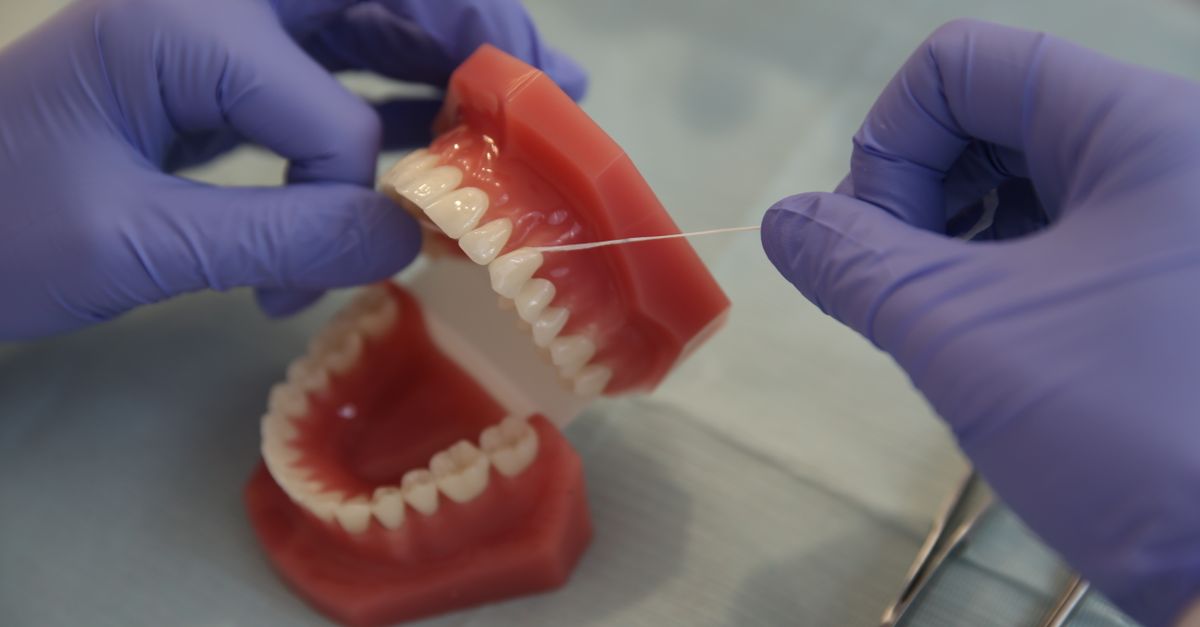
A research team at the Hong Kong University of Science and Technology (HKUST) has created a device that turns an ordinary daily habit into a health-monitoring tool. The so-called Smart Floss, described in a study published in the journal Science Advances, allows users to check their blood sugar, uric acid levels, and gum inflammation simply by flossing their teeth.
The device, developed by a team led by Prof. Hnin Yin Yin Nyein of HKUST's Department of Chemical and Biological Engineering in collaboration with the University of Hong Kong's Faculty of Dentistry, captures gingival crevicular fluid (GCF) — a serum-derived liquid that naturally seeps from tiny blood vessels into the gumline crevice. According to HKUST, GCF carries biochemical markers of both whole-body metabolism and local oral inflammation, but it has been difficult to collect outside a dental clinic because it is viscous, evaporates quickly, and typically requires a trained professional to extract using paper strips.
The Smart Floss works by embedding a microfluidic channel and sensor array directly into a strand of floss. The floss is coated with food-grade pectin, a natural plant extract. When a user flosses gently for about 20 seconds, the motion draws a microscopic droplet of GCF between two strands of the floss. Surface tension holds the droplet in place. The user then reels the floss into a sealed chamber inside the handle, where the droplet meets a sensor array that measures blood glucose, uric acid (an indicator of gout risk), and markers of active gum inflammation. A built-in volume counter and microprocessor adjust calculations based on the exact droplet size, and results are transmitted wirelessly to a smartphone within three minutes, the university reported.
"The true breakthrough here is bridging the gap between daily personal care and precision medicine," Prof. Nyein said in a statement from HKUST. "Monitoring chronic conditions often fails because it feels painful, intrusive, and inconvenient. By embedding biosensors into an everyday flossing routine, we give people an effortless window into both their metabolic health and oral inflammation, shifting care from reactive clinic visits to proactive daily prevention."
According to HKUST, the team invited people of different ages to test the device, including individuals with diabetes and varying levels of gum health. Participants described the device as comfortable, the university reported. Elderly participants and those with diabetes especially appreciated being able to monitor their health without needle pricks, according to the researchers.
Preliminary tests showed that the Smart Floss's measurements of blood glucose and uric acid correlated well with standard blood tests, and its gum-inflammation readings aligned with conventional periodontal probing examinations conducted by dental professionals, HKUST said.
The team plans to conduct larger-scale studies to further improve the device's convenience and reliability for everyday home use, Prof. Nyein added. The researchers also aim to enhance mass-manufacturing and automated quality-control capabilities and accelerate commercialization.
For university students — many of whom may be managing chronic conditions like diabetes or simply seeking convenient ways to track their health — the device represents a potential shift toward integrating medical monitoring into daily routines without the need for clinic visits or painful finger pricks. The technology is still in development, and the researchers caution that larger studies are needed before it becomes available for widespread use.