
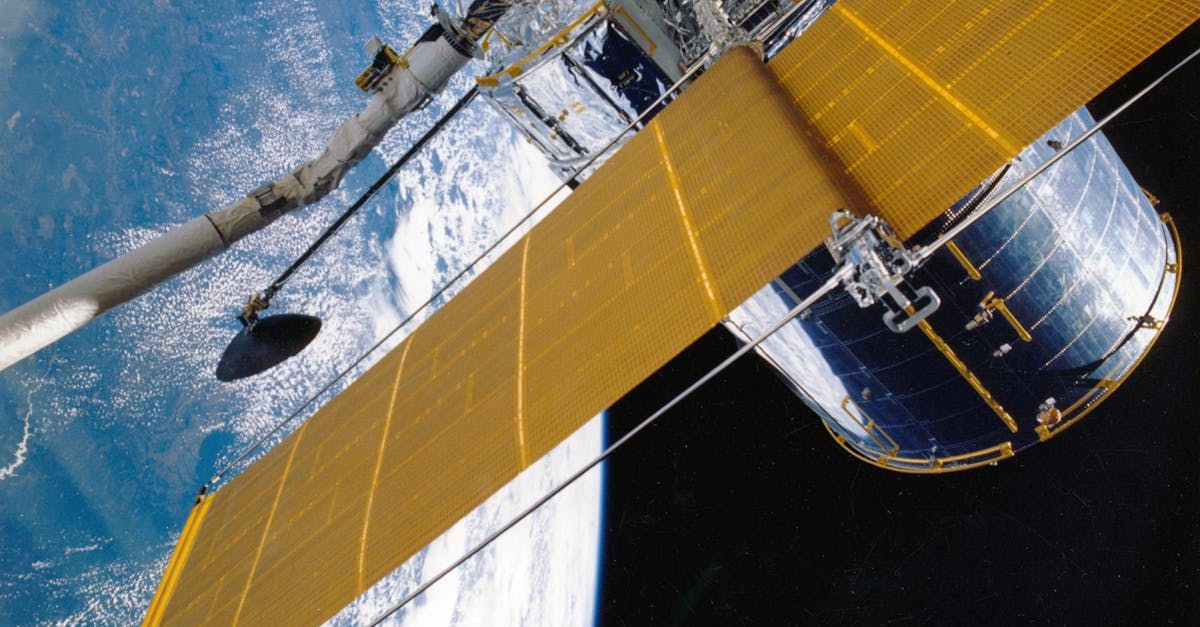
Chalmers University of Technology in Gothenburg, Sweden, will launch a new Master's programme in New Space Systems Engineering in autumn 2027, designed to train engineers who can combine technical expertise with entrepreneurial thinking for the rapidly growing commercial space industry.
According to Chalmers, the programme is the first in Sweden to focus explicitly on "New Space" — the shift from state-led space agencies to commercial actors developing and operating space systems — and on entrepreneurship. It will cover space propulsion, structures and materials, electronics and software, and geodesy and remote sensing, alongside business skills such as commercialising innovations, space law and regulations, and the practical differences between government and private space missions.
"Today, space technology has become part of everyone's lives. Satellites enable communication, navigation, and weather forecasting, and the market for new space-based services and solutions is growing rapidly. This creates opportunities for new companies and innovations, but also a growing need for engineers who can combine technical expertise with entrepreneurship. That's what Chalmers' new programme will address," said Jörgen Blennow, Vice President of Education at Chalmers.
Students will learn to design and operate space systems, including hands-on work building a spacecraft. They will also have access to advanced facilities such as the Onsala Space Observatory and Chalmers' clean room. Programme Director Erik Bohlin noted that the entrepreneurship component is unique to the programme, teaching students how innovations can be commercialised and the differences between state-led and commercial missions.
Chalmers is based in Gothenburg, at the centre of Sweden's space industry. The region accounts for about two-thirds of the country's space-sector workforce, according to a report from Business Region Göteborg, and five of Sweden's ten largest space companies are located there. Rüdiger Haas, professor and coordinator for space research at Chalmers, said the university expects many students to carry out project work with these companies during their studies.
The programme responds to the rapid expansion of the space economy. With over 16,000 satellites now in orbit and many more planned, safety, environmental concerns, and international regulatory frameworks are becoming increasingly important, according to Karine Le Bail, a course teacher and expert in measuring Earth's movements from space. "The new space economy is incredibly exciting right now, but it also presents major challenges. Future space engineers must therefore be able to combine technical development and entrepreneurship with an understanding of the consequences of technology — and the responsibilities that come with it," she said.
Applications for the programme open until 15 January 2027, with the first cohort beginning their studies in autumn 2027. Other Swedish universities, including Luleå University of Technology and KTH Royal Institute of Technology, already offer space technology programmes, but Chalmers says its new degree is the first in the country to centre on New Space and entrepreneurship.
For students considering a career in the space sector, the programme offers a pathway into an industry that is increasingly driven by private companies and startups. Graduates could work in established space firms, develop new satellite-based services, or start their own companies. Chalmers' location in western Sweden places students near a dense cluster of space employers, potentially offering project work and networking opportunities during their studies.